

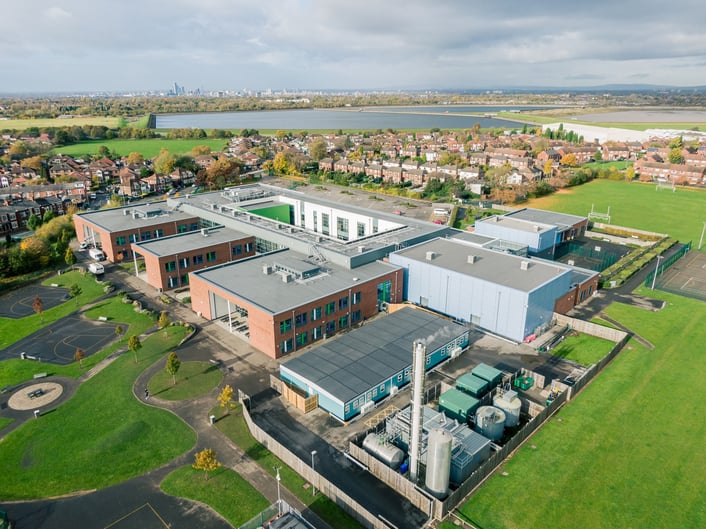
Across education, healthcare, and commercial sectors, organisations are under increasing pressure to expand their facilities while controlling costs, minimising disruption, and meeting ambitious sustainability targets. Traditional construction isn't always the most practical solution, particularly where organisations need to remain operational throughout a building project.
As organisations rethink how they invest in their estates, permanent modular construction is increasingly being viewed as a strategic long-term solution rather than simply an alternative building method.
Modular buildings are becoming a strategic choice for UK organisations because they offer faster delivery, greater programme certainty, reduced disruption, and the flexibility to support long-term estate planning. By manufacturing buildings off-site while site preparation takes place simultaneously, modular construction UK helps organisations respond more quickly to changing demands without compromising on quality.
Modern modular building solutions are now widely used to deliver permanent classrooms, healthcare facilities, offices, and specialist buildings that integrate seamlessly with existing estates. In this article, we'll explore why modular construction is gaining momentum across the UK, the factors driving its adoption, and how organisations are using it to support long-term growth.
Key Takeaways
- Modular buildings UK are becoming a strategic choice across education, healthcare, and commercial sectors.
- Organisations are increasingly prioritising programme certainty, operational continuity, and long-term estate planning.
- Off-site manufacturing can reduce disruption while helping projects be delivered more efficiently.
- Modern modular building solutions provide permanent, high-quality facilities designed to support future growth.
- Real-world projects demonstrate how modular construction is helping organisations expand with confidence.
Growing Demand Is Changing Estate Strategies
Across the UK, organisations are facing a common challenge: their estates must support growing demand while remaining operational, sustainable, and financially viable.
Schools are accommodating increasing pupil numbers and expanding specialist provision. Healthcare providers are delivering more services within community settings while responding to rising patient demand. Commercial organisations are investing in facilities that support business growth without disrupting day-to-day operations.
These pressures are changing how organisations approach capital investment. Rather than focusing solely on construction costs, decision-makers are placing greater emphasis on delivery certainty, operational continuity, and long-term estate performance.
As a result, modular buildings UK projects are becoming an increasingly strategic choice. Rather than simply providing additional space, modular construction UK enables organisations to expand their estates in a way that supports future growth while reducing disruption during delivery.
Faster Delivery Supports Business Continuity
One of the key reasons organisations are choosing modular construction is the ability to expand facilities without significantly disrupting day-to-day operations.
Because modular buildings are manufactured in a controlled factory environment while site preparation takes place simultaneously, construction programmes can often be completed more efficiently than many traditional methods. This enables organisations to bring new facilities into use sooner while reducing the impact on staff, service users and business operations.
For organisations operating live environments, faster delivery means more than simply completing a project sooner. Schools can reduce disruption during term time, healthcare providers can continue delivering patient care, and commercial businesses can minimise the impact on daily operations.
This approach was recently demonstrated at Broomgrove Infant & Junior School, where a permanent classroom building replaced ageing accommodation within a live school environment. Off-site manufacturing helped minimise disruption while delivering modern teaching facilities designed for long-term use.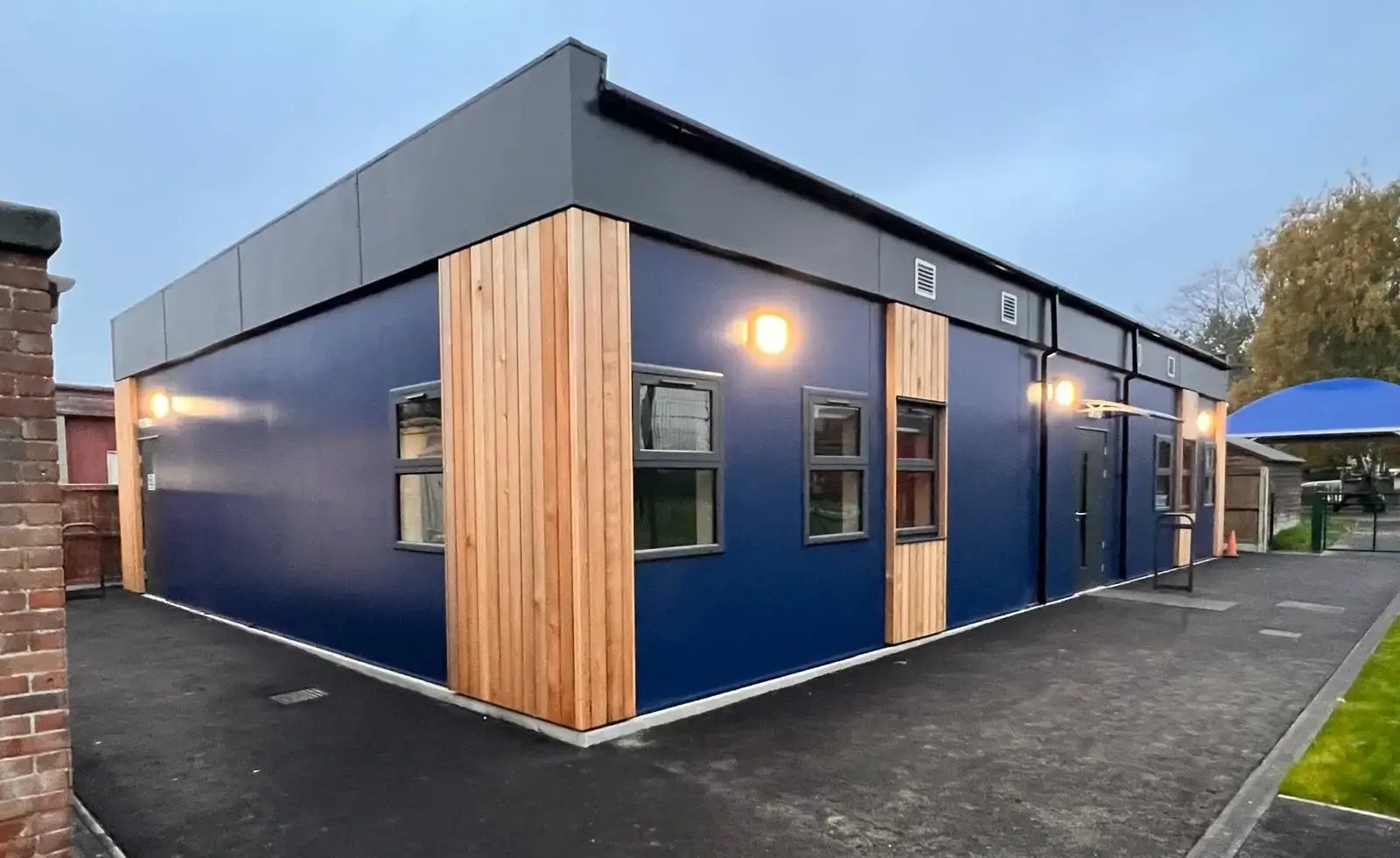
Organisations Are Prioritising Programme Certainty
For many organisations, the biggest risk associated with construction isn't simply how long a project takes, it's uncertainty!
Delays can affect school terms, healthcare services, business operations, and planned investment programmes. Increasingly, organisations are looking for building solutions that provide greater confidence around delivery timescales and project planning.
By manufacturing much of a building off-site, modular construction UK helps reduce many of the variables associated with traditional construction, supporting more predictable delivery programmes and helping organisations plan with greater certainty.
Sustainability Is Influencing Construction Decisions
Sustainability is now a key consideration for organisations investing in new buildings.
Off-site manufacturing can help reduce material waste, improve manufacturing efficiency, and shorten on-site construction programmes. Modern permanent modular buildings can also incorporate high-performance insulation, energy-efficient building services, and durable materials that support lower operational energy use over the building's lifespan.
For many organisations, these benefits align with wider environmental and carbon reduction objectives while creating buildings that continue to perform efficiently for decades.
As sustainability expectations continue to increase across education, healthcare, and commercial sectors, modular building solutions are becoming an increasingly attractive option for long-term estate investment. Organisations looking to reduce the environmental impact of new developments can also explore how Net Zero modular buildings support carbon reduction, improved energy efficiency, and more sustainable estate development.
Organisations Are Planning Estates For Long-Term Growth
Many organisations are no longer investing in buildings simply to solve immediate space shortages. Instead, they are looking for facilities that support long-term growth while remaining adaptable to future needs.
Permanent modular building solutions provide that flexibility. They can maximise constrained sites, complement existing buildings, and be designed around future expansion plans, allowing organisations to make better use of their estates over time.
This strategic approach can be seen at South Wolds Academy, where a permanent two-storey modular sixth form building created additional teaching accommodation on an existing school site. By expanding upwards rather than relocating, the school increased capacity while creating a building designed to support future growth.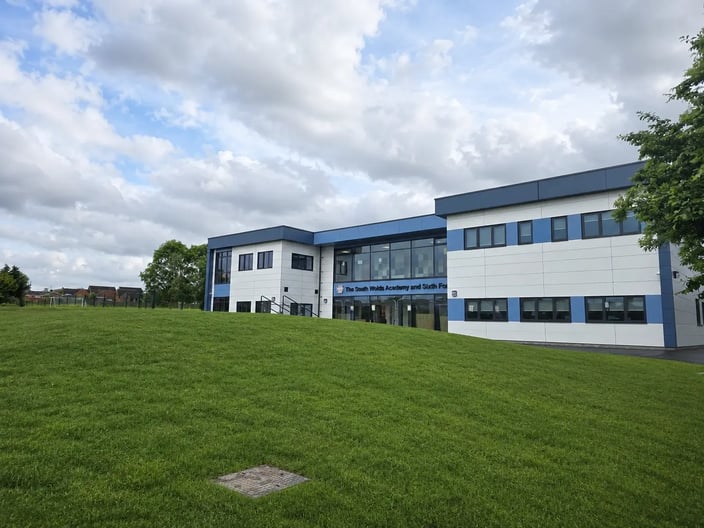
Real-World Projects Are Increasing Confidence In Modular Construction
As more permanent modular buildings are successfully delivered across the UK, organisations have greater confidence in modular construction than ever before.
Completed projects across education, healthcare, and commercial sectors demonstrate how permanent modular buildings can support long-term estate strategies while delivering high-quality environments with reduced disruption.
This real-world evidence is helping modular construction move from an alternative approach to an increasingly mainstream procurement choice.
Education
Education providers need additional teaching space while minimising disruption to pupils and staff. Permanent modular buildings provide classrooms, SEND facilities, laboratories, and multi-storey teaching buildings that can often be delivered within shorter construction programmes.
Projects such as Broomgrove Infant & Junior School and South Wolds Academy demonstrate how modular construction can create modern learning environments while allowing schools to remain operational throughout much of the project.
Healthcare
Healthcare providers require buildings that support growing patient demand while maintaining continuity of care.
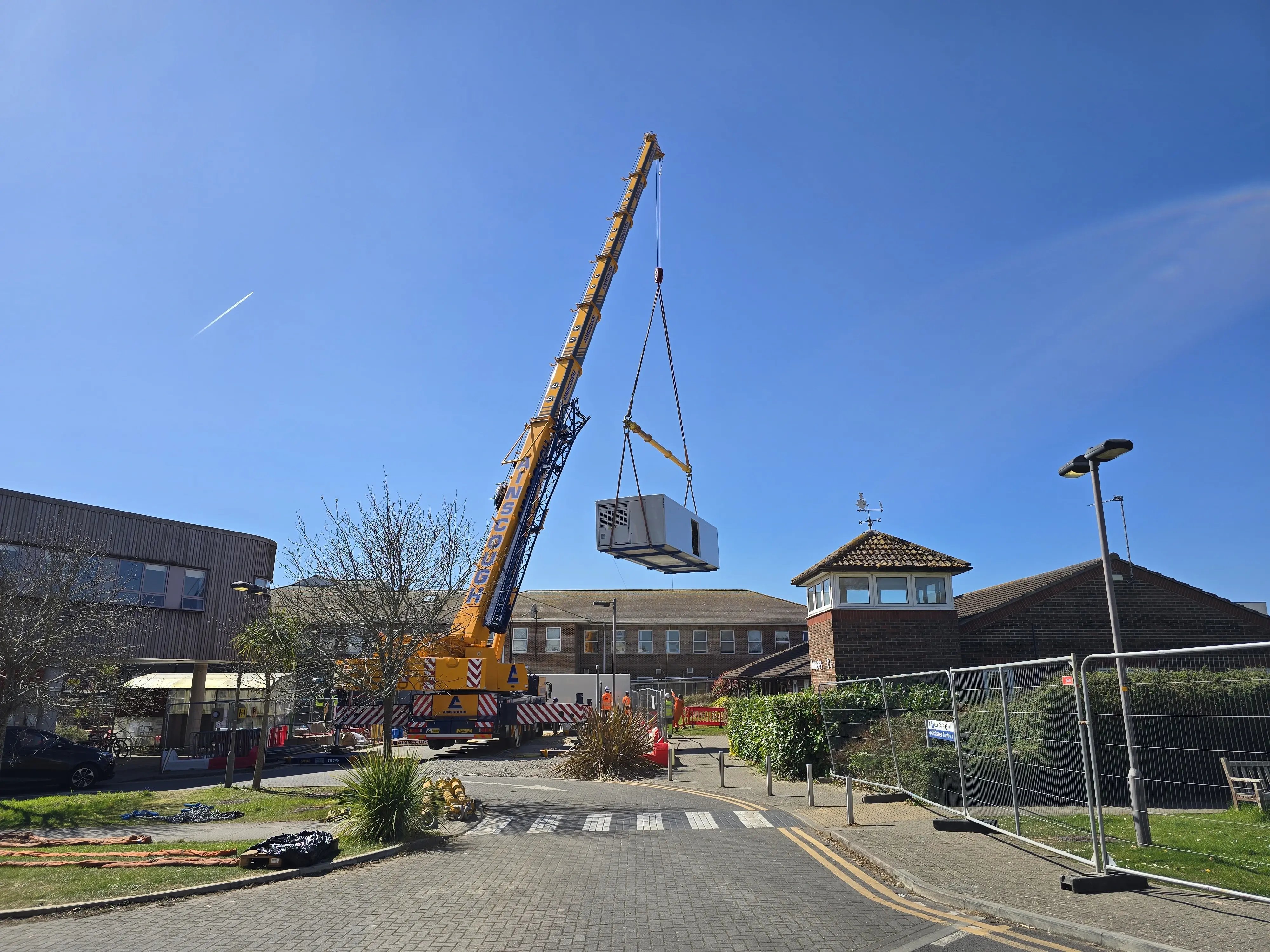
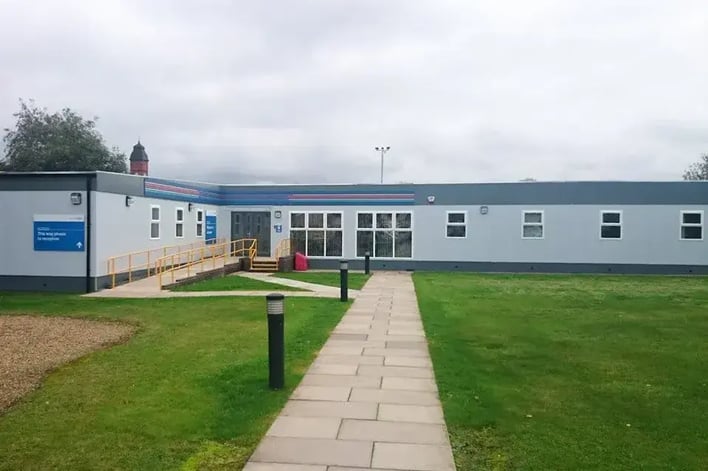
During the redevelopment of St Richard's Hospital, a modular mortuary facility provided specialist accommodation while permanent facilities were upgraded. Similarly, Royal Surrey County Hospital expanded clinical capacity with a modular isolation ward, demonstrating how off-site construction can deliver high-quality healthcare facilities with minimal disruption to live hospital environments.
Commercial
Commercial organisations are increasingly adopting modular construction for offices, welfare facilities, laboratories, and operational support buildings. Faster delivery and greater programme certainty allow businesses to invest in new facilities while reducing disruption to daily operations and supporting future growth.
Why Modular Construction Is Becoming Mainstream
Perhaps the biggest change in recent years is not simply the number of modular buildings being delivered, but the way they are viewed.
Modern modular buildings are no longer considered a temporary alternative. Advances in design, manufacturing, and quality assurance have established permanent modular construction as a trusted solution for long-term developments across education, healthcare, and commercial sectors.
At the same time, organisations are placing greater importance on reducing project risk, improving sustainability, and delivering facilities that provide long-term value. These priorities align closely with the strengths of modular construction UK, making it an increasingly attractive option for future estate investment.
As more successful projects are completed across the UK, confidence in modular construction continues to grow, helping it move from an alternative building method to a strategic choice.
Conclusion
Organisations across the UK are facing increasing pressure to expand their estates while balancing operational demands, sustainability objectives, and long-term investment priorities. As a result, modular buildings UK are becoming a strategic choice for delivering permanent, high-quality facilities with greater programme certainty, reduced disruption, and the flexibility to support future growth.
Through off-site manufacturing, efficient delivery programmes, and adaptable design, modular construction UK enables education providers, healthcare organisations, and commercial businesses to create buildings that meet today's operational requirements while supporting evolving estate strategies for years to come.
If you're exploring modular building solutions for your next project, explore our Education, Healthcare and Commercial modular building solutions, or contact our team to discuss how permanent modular construction could support your organisation's future estate plans.
How Modular GP Surgery Buildings Help Practices Expand Patient Capacity
Why Prefab Commercial Buildings Are Becoming More Popular with UK Businesses
No Comments Yet
Let us know what you think