

Infection prevention and control is a fundamental consideration in the design of every healthcare building. From patient wards and treatment rooms to specialist clinical facilities, hospitals must provide environments that help minimise the risk of infection while supporting safe, efficient patient care.
How Infection Control Influences Modern Hospital Design
Building design plays an important role in achieving this. Layouts, ventilation systems, internal finishes, and the quality of construction all contribute to creating spaces that are easier to clean, maintain, and operate safely.
Modern modular hospital buildings are designed around these same principles. Manufactured within controlled factory conditions before being installed onsite, permanent modular buildings provide the same standards of quality, durability, and compliance expected from traditional construction while supporting the operational requirements of modern healthcare estates.
Whether delivering hospital wards, diagnostic facilities, specialist treatment areas or wider healthcare developments, modular healthcare facilities can be designed to align with NHS estate requirements and infection prevention principles.
Infection Control Starts Long Before A Building Opens
Effective infection prevention is not simply about cleaning regimes or clinical procedures. It begins during the earliest stages of building design.
Healthcare environments must support safe movement throughout the building, minimise unnecessary cross-traffic, and provide practical layouts that enable staff to deliver patient care efficiently.
This influences decisions such as:
- Patient and staff circulation routes
- Separation of clean and non-clinical areas
- Ventilation strategies
- Internal finishes
- Access for cleaning and maintenance
- Clinical room layouts
By considering these principles from the outset, healthcare providers can create facilities that support both operational efficiency and long-term infection prevention.
Controlled Factory Manufacturing Supports Consistent Quality
One of the key advantages of hospital modular construction is the manufacturing environment itself.
Unlike traditional construction, where much of the work takes place onsite and is exposed to changing weather conditions, modular buildings are manufactured within controlled factory facilities using repeatable production processes and robust quality assurance procedures.
This enables:
- Consistent quality throughout manufacture
- Better protection of building materials
- Thorough inspection before delivery
- Reduced exposure to weather during construction
- Greater programme certainty
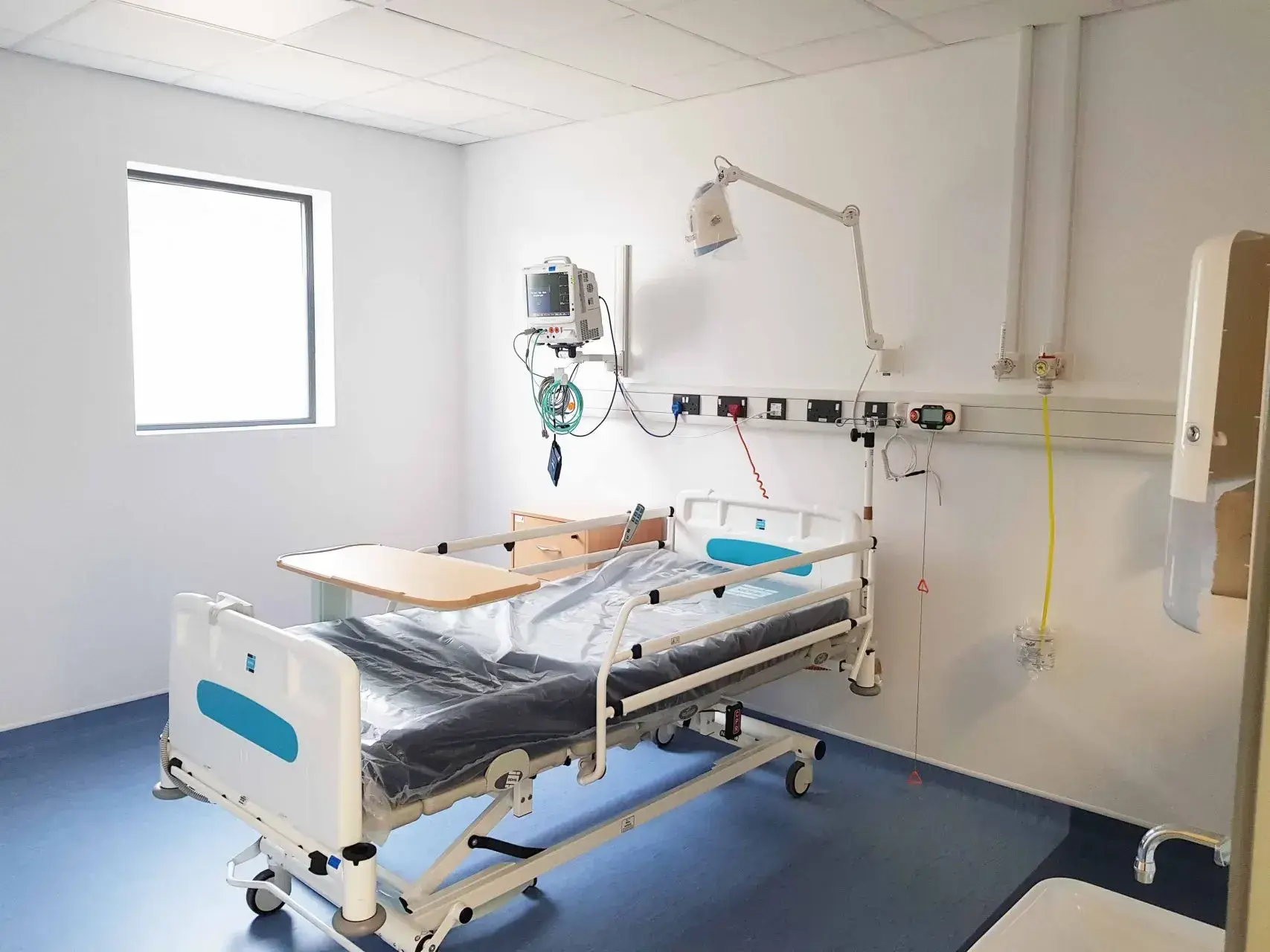
This approach was demonstrated during the delivery of the Royal Surrey County Hospital isolation ward project, where 24 building modules were manufactured offsite while groundworks progressed simultaneously. Manufacturing within a controlled environment helped ensure consistent quality before installation on the live hospital estate, supporting both programme efficiency and the high standards expected within NHS healthcare facilities.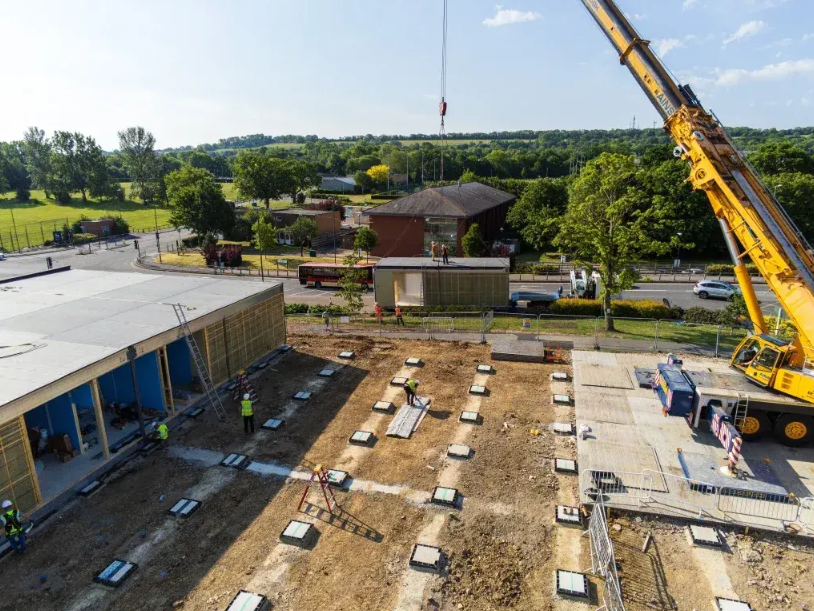
Hygienic Materials And Cleanable Surfaces
Healthcare buildings require durable materials that can withstand intensive daily use while supporting effective cleaning and maintenance.
Modern modular healthcare facilities incorporate internal finishes selected for demanding clinical environments, including:
- Smooth internal wall finishes
- Durable flooring systems
- Hygienic ceiling finishes
- Robust doors and ironmongery
- High-quality joinery and detailing
These materials help create environments that are practical to maintain while supporting long-term performance across busy healthcare settings.
Designing Clinical Spaces Around Healthcare Workflows
Every healthcare environment operates differently, which is why building layouts should be designed around the way services are delivered rather than following standardised building templates.
Modular construction provides the flexibility to create facilities that support clinical workflows, patient movement, and operational efficiency.
Depending on the intended use of the building, this may include:
- Separate patient and staff circulation routes
- Isolation rooms where required
- Clearly defined clinical and non-clinical spaces
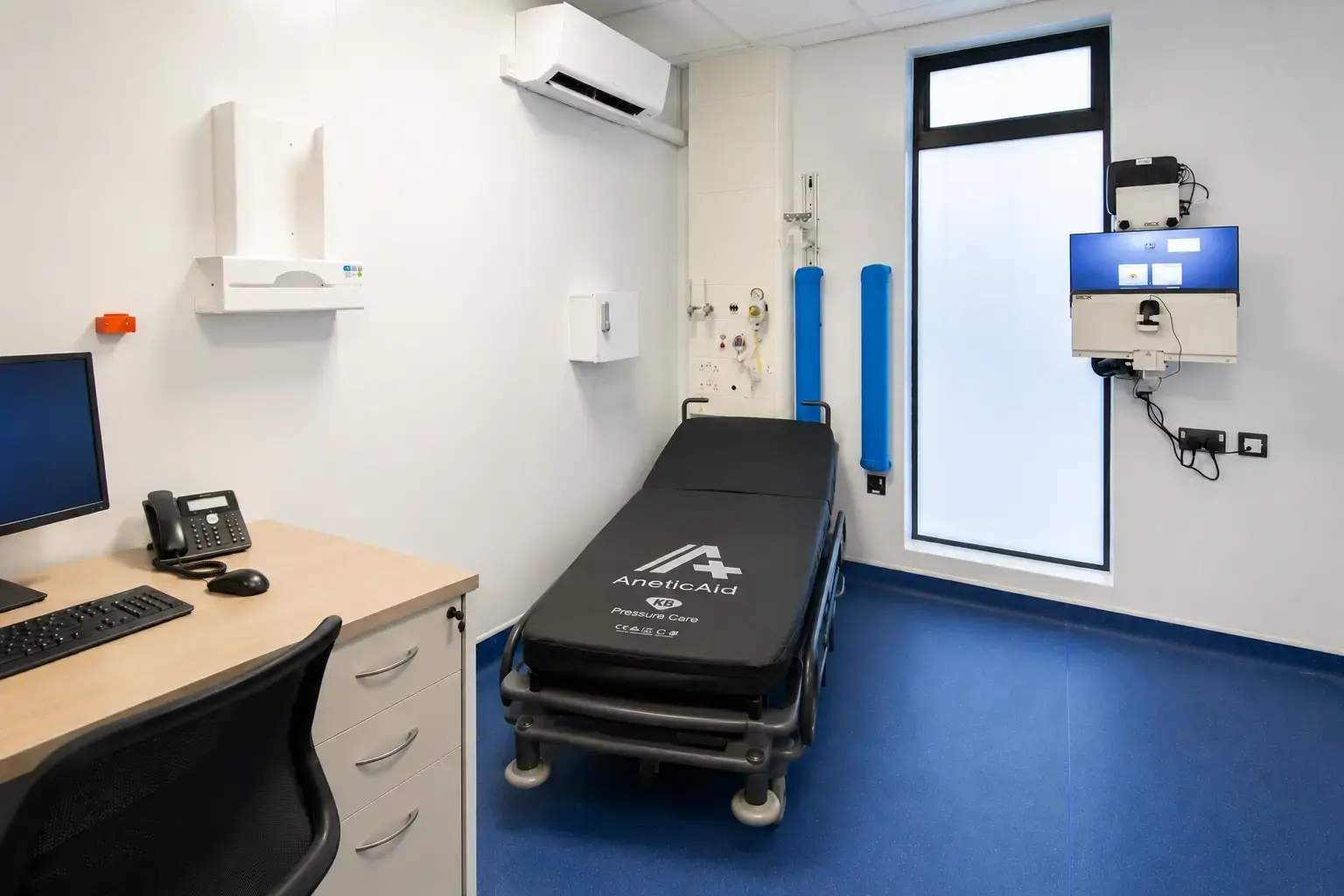
- Dedicated treatment and consultation areas
- Appropriate storage for clean and used equipment
- Logical departmental layouts that support efficient patient care
Designing buildings around operational requirements helps healthcare providers create facilities that work effectively from the day they open.
Ventilation And Building Services
Ventilation is another important consideration within healthcare environments and forms part of wider infection prevention strategies.
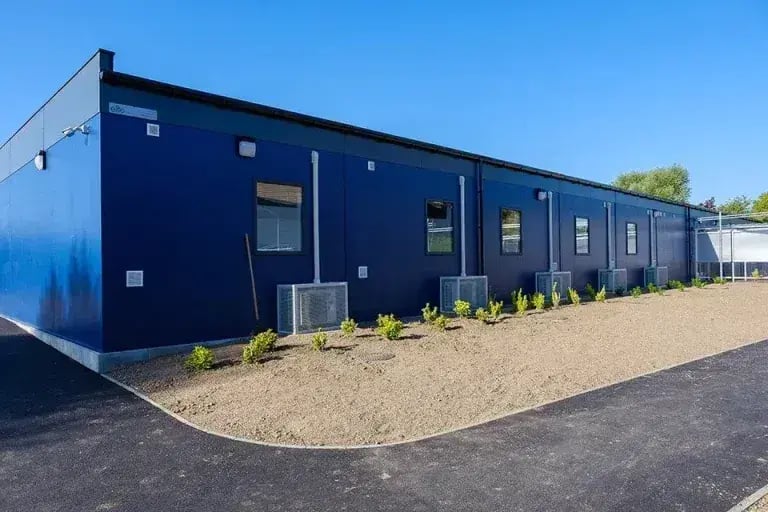
Permanent modular buildings can be designed to accommodate ventilation and mechanical services appropriate for their intended clinical use, helping create comfortable environments for patients, staff, and visitors.
Depending on the building's function, systems may be designed to support:
- Fresh air supply
- Controlled air movement between spaces
- Temperature control
- Comfortable internal environments
The exact specification will always depend on the intended healthcare application together with the relevant NHS guidance, Building Regulations, and project-specific requirements.
Reducing Disruption On Live Hospital Estates
Many healthcare projects are delivered within operational hospital environments where minimising disruption is essential.
Because modular buildings are manufactured offsite while site preparation progresses simultaneously, onsite construction programmes are often significantly shorter than traditional methods.
This can help reduce:
- Construction traffic
- Noise around clinical areas
- Site congestion
- Disruption to hospital operations
The Royal Surrey County Hospital project demonstrates this advantage well. While the isolation ward modules were being manufactured offsite, groundwork preparation continued onsite, allowing installation to take place efficiently once the modules were complete. This approach reduced the amount of construction activity required on the live hospital estate while helping maintain programme certainty.
Supporting NHS Estate Requirements
Healthcare buildings must satisfy a wide range of operational, clinical, and regulatory requirements.
Permanent modular construction is fully capable of delivering buildings designed in accordance with the relevant Building Regulations and healthcare requirements for each individual project.
Rather than relying on standard building layouts, modular healthcare buildings can be tailored to the operational needs of NHS Trusts, healthcare providers, and private healthcare organisations, creating facilities that support patient care, staff wellbeing, and future estate development.
Modular Construction Without Compromise
Modern modular hospital buildings are permanent buildings designed for long-term use.
From hospital wards and diagnostic facilities to specialist treatment centres and wider healthcare developments, modular construction delivers the same expectations for quality, durability, and compliance as traditional construction while providing additional advantages through controlled manufacturing and reduced onsite construction.
When designed around clinical requirements and manufactured to high standards, permanent modular healthcare buildings become an integral part of modern healthcare estates, supporting safe, efficient environments for patients, staff, and visitors alike.
Conclusion
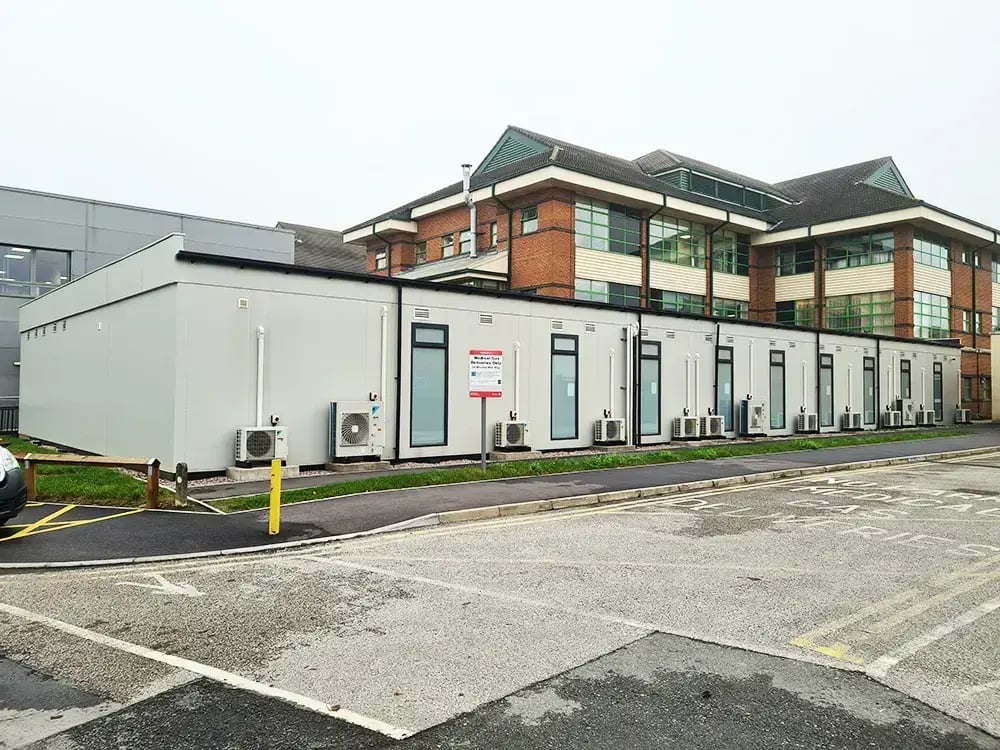
Infection prevention begins long before a healthcare facility welcomes its first patients. The quality of construction, building layout, internal finishes, and ventilation all contribute to creating safe clinical environments that support effective patient care. As demonstrated by the Royal Surrey County Hospital isolation ward project, permanent modular construction can deliver specialist healthcare facilities that combine high-quality construction, practical design, and compliance with modern NHS estate requirements, supporting safe, efficient healthcare environments for patients, staff, and visitors. Get in touch with us for more information.
Related Healthcare Projects
If you're exploring how permanent modular construction can support modern healthcare environments, these resources may also be of interest:
→ Royal Surrey County Hospital Isolation Ward Case Study
→ View the Royal Surrey County Hospital Project
Discover how a 20-bed modular isolation ward was manufactured offsite and installed within a live NHS hospital estate, incorporating hygienic anti-bacterial finishes and specialist clinical accommodation to support modern healthcare requirements.
Modular Hospital Wards
Learn how permanent modular hospital wards provide high-quality inpatient accommodation designed around the operational requirements of NHS Trusts and healthcare providers, with flexible layouts, durable materials, and efficient project delivery.
→ Explore Modular Hospital Wards

Why Modular Construction Is Ideal For Temporary Hospital Decant Facilities
How Modular Healthcare Buildings Help Hospitals Create Dedicated Treatment Spaces
No Comments Yet
Let us know what you think