

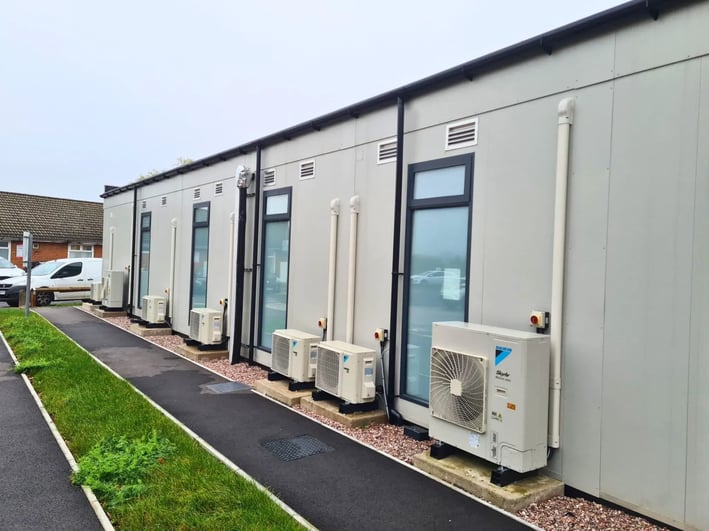
Across the NHS, hospitals face growing pressure to expand capacity, modernise ageing estates, and maintain continuity of care. More than 42% of the NHS estate in England was built before 1985, and around 14% pre-dates the founding of the NHS (UK Parliament Library, 2024). Meanwhile, the maintenance backlog has reached nearly £16 billion, posing ongoing challenges for safety, efficiency, and sustainability (Construction News, 2025).
For estates and capital project teams, the challenge is clear: how to deliver modern, compliant spaces quickly and cost-effectively — without interrupting essential services.

Why Modular Healthcare Buildings
Modular healthcare buildings provide a fast, flexible, and low-disruption route to hospital expansion. Built off-site and installed with precision, they allow Trusts to create new wards, theatres, diagnostic suites, or staff areas while keeping hospitals operational.
This approach is transforming how NHS estates deliver projects. Modular hospitals combine off-site manufacturing with on-site installation, reducing build times, improving quality, and helping hospitals meet rising demand safely and sustainably.
Expanding Capacity Without Compromising Care
Demand for hospital space continues to climb, with a record 7.8 million people currently waiting for treatment in England (UK Parliament Library, 2024). Clinical teams need more rooms, beds, and diagnostic capacity to meet patient needs — yet traditional construction on live sites brings unavoidable risks. Noise, vibration, and restricted access that can disrupt care and strain staff.
Modular construction minimises these challenges. Modular healthcare buildings are designed and manufactured off-site, allowing on-site work to proceed around hospital operations. Whether expanding a ward, adding a diagnostic suite, or creating rest and admin areas, modular projects enable safe, compliant, and efficient growth while maintaining patient safety and service continuity.
Designed for Compliance and Assurance
Modular healthcare buildings are designed to meet NHS Health Building Notes (HBNs) and Health Technical Memoranda (HTMs), covering infection prevention, fire safety, ventilation, and accessibility.
This alignment ensures new facilities integrate seamlessly with existing hospital infrastructure and simplifies governance during capital approval. By meeting NHS standards from the outset, modular hospitals help estates teams maintain assurance and confidence throughout delivery.
Precision, Quality, and Control Through Off-Site Manufacturing
Up to 90% of modular healthcare buildings are completed in a controlled factory environment before arriving on-site. This off-site process dramatically reduces site traffic, noise, and safety risks while supporting infection control through consistent, high-quality production.
Modules are built using hygienic, easy-to-clean materials and undergo rigorous testing before installation. Once delivered, they can be craned into position on your site and connected in days, allowing new clinical spaces to become operational far faster than conventional builds.
Compared with traditional construction, modular methods can reduce project times by up to 50% and material waste by as much as 90%. These efficiencies can help you meet sustainability, quality, and operational goals while ensuring patient safety and continuity of care.
Flexible Solutions for Every Part of Your Estate
Modular construction gives you freedom to adapt your estate where it matters most — from entire hospital wings to individual modular hospital rooms that expand capacity quickly and safely.
NHS capital teams are using modular healthcare buildings for:
- Clinical Facilities: inpatient wards, operating theatres, endoscopy suites, recovery and critical care units
- Diagnostics and Outpatients: imaging centres (CT and MRI), outpatient departments, and community diagnostic hubs
- Support Services: laboratories, mortuaries, and logistics areas
- Staff and Administration: break areas, changing rooms, training spaces, and offices
- Temporary and Decant Buildings: short-term wards, treatment areas, and clinical support spaces during refurbishment or expansion projects
Whether you need permanent additions or interim solutions, modular hospital buildings can evolve with your estate strategy. They can be relocated, reconfigured, or extended — giving you flexibility to respond to future service changes without restarting from scratch.
Predictability and Value in Capital Planning
Modular hospitals provide early cost certainty and clearer programme visibility, helping you plan confidently and make stronger business cases. Because design and manufacturing are controlled processes, you can reduce the risk of cost changes and scheduling surprises later in the project.
Typically 40–60% faster than traditional builds (Building Magazine, 2023), modular delivery also means you can plan commissioning and prepare staff and services for the move with greater accuracy. Earlier occupation supports quicker patient benefit and a stronger return on investment, which is essential when budgets must demonstrate measurable value.
With reliable timelines, controlled costs, and long-term adaptability, modular construction strengthens capital planning and helps ensure every pound invested delivers the outcomes your hospital needs.
Choosing the Right Modular Partner
Delivering a modular hospital or modular healthcare building on a live hospital site requires a deep understanding of clinical environments, compliance, and risk management. Selecting a modular partner experienced in healthcare is essential to ensure safety, quality, and minimal disruption to care.
An experienced provider can guide each stage of the process, from feasibility and design through to manufacture, installation, and commissioning, aligning delivery with your hospital’s capital plan and operational needs.
Modular Hospitals from Elite Systems GB
Our modular hospitals and modular healthcare buildings are designed to help hospitals expand safely, efficiently, and with confidence — keeping patient care at the heart of every project.
Get in touch with Elite Systems GB to discuss how modular construction can help your hospital grow without disruption.

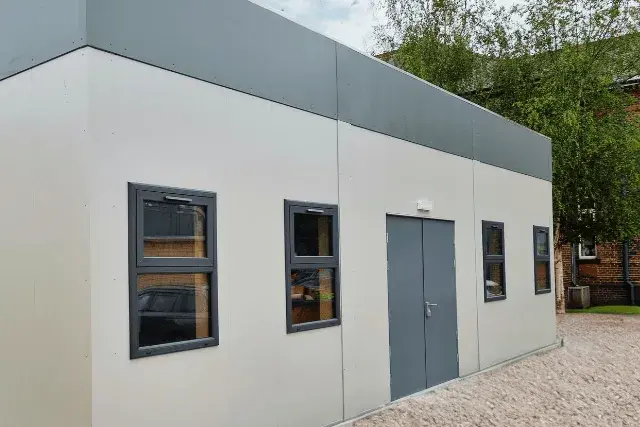
Streamlining Excellence: Elite Systems Aids Warrington Hospital with a Simplified Solution
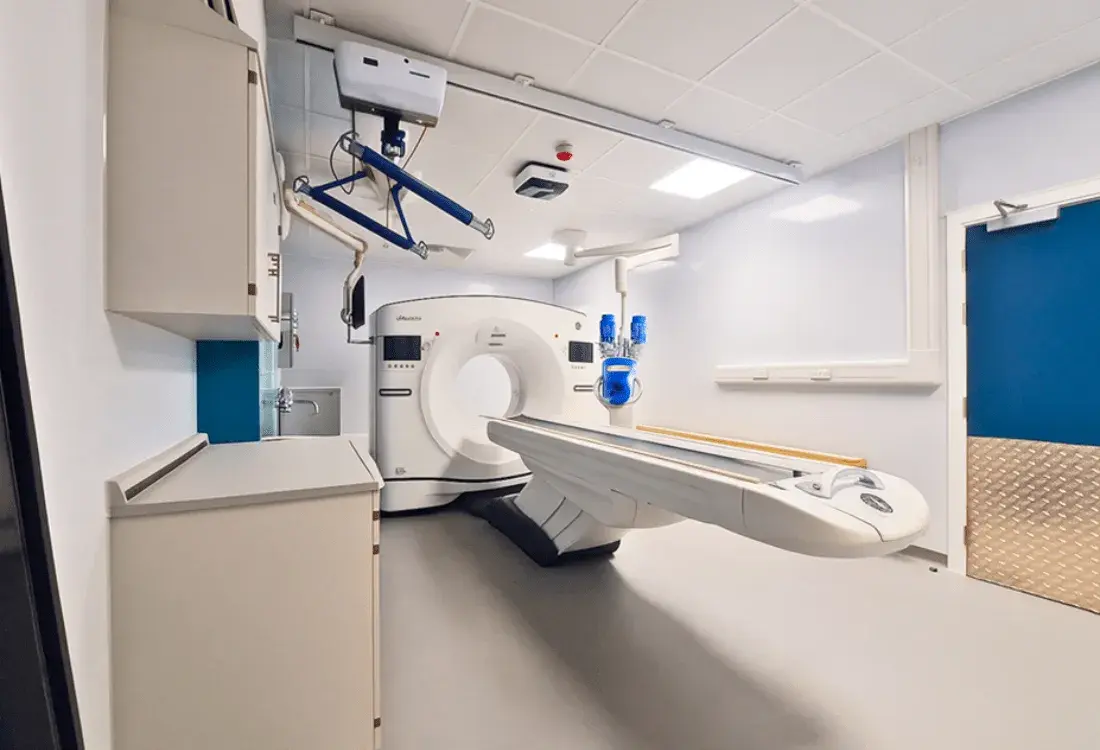
Why Modular Buildings Are Ideal for MRI and Diagnostic Facilities
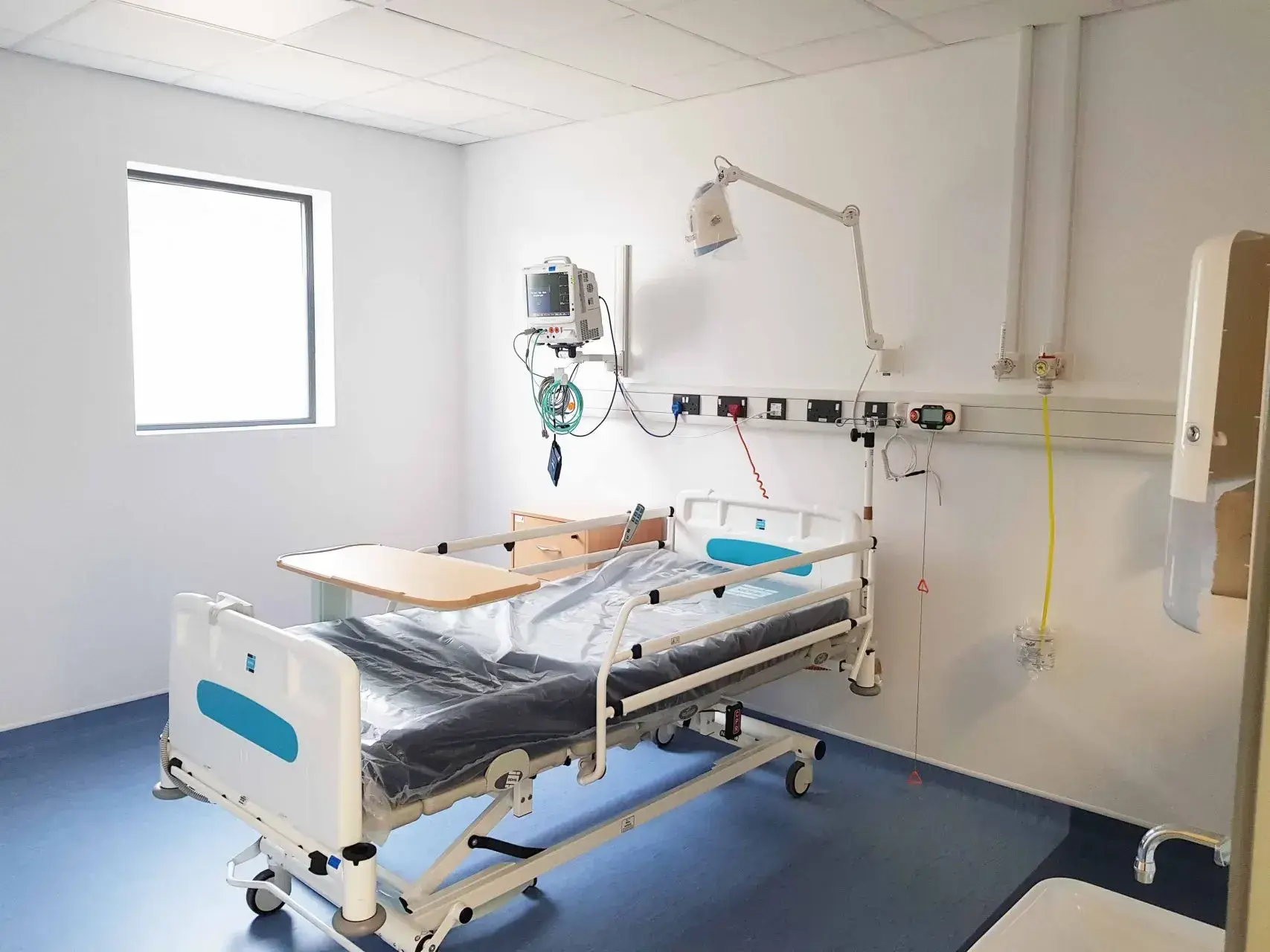
No Comments Yet
Let us know what you think