

When planning a new building, weather is often one of the biggest unknowns. Rain, wind, cold snaps, and seasonal disruption can all affect construction programmes, particularly in the UK. One of the key advantages of modular construction is how it reduces exposure to these risks.
This blog explores how modular building weather performance is managed, why off-site manufacture helps protect programme certainty, and what still needs to be considered during installation.
Does Bad Weather Delay Modular Building Projects?
In most cases, bad weather is far less likely to delay modular building projects than traditional construction.
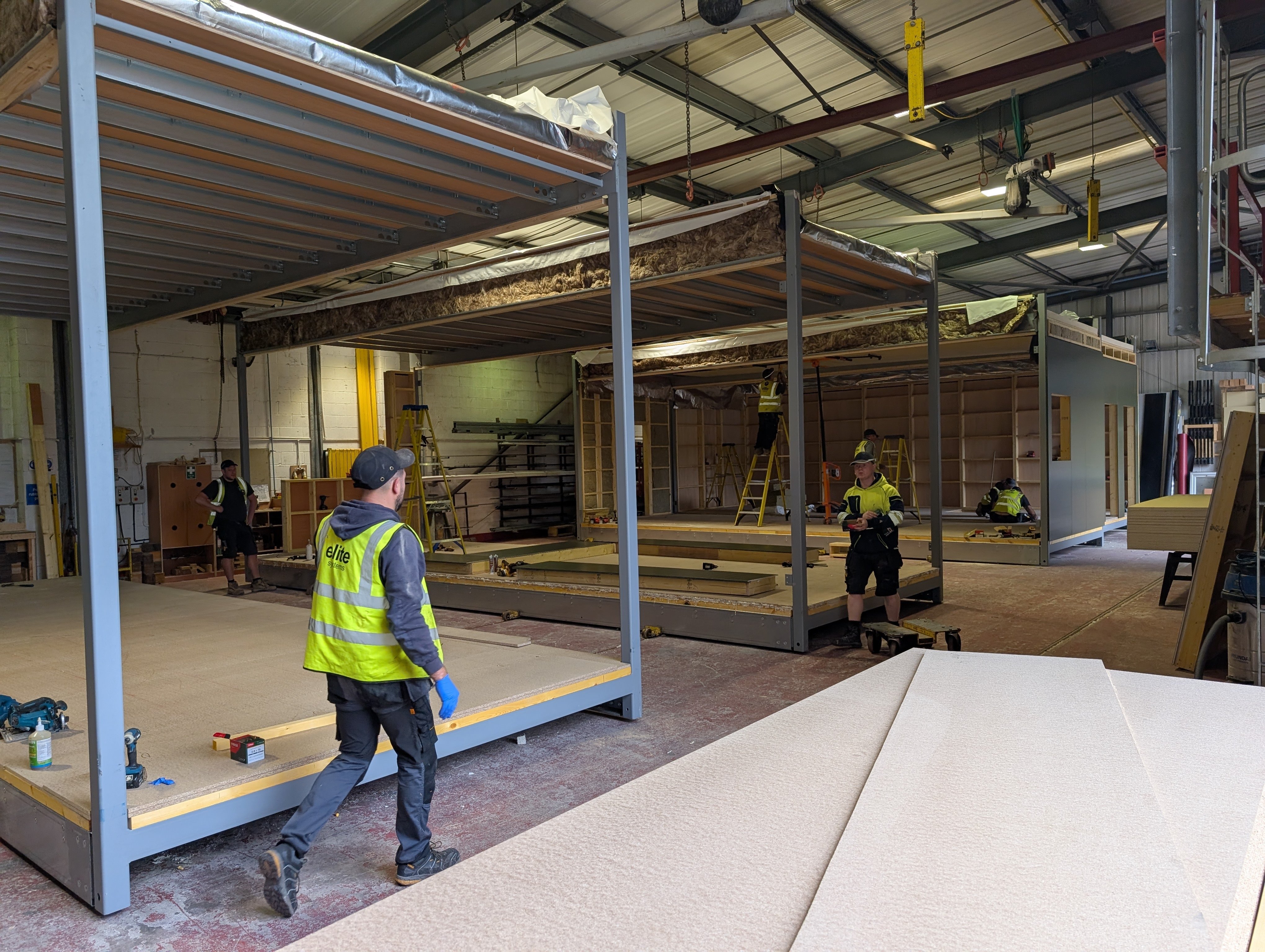
That’s because the majority of construction work takes place in factory-controlled environments rather than on open building sites. While traditional builds rely heavily on weather-dependent site activities, modular construction shifts much of this work indoors, reducing the impact of rain, wind, and cold on progress.
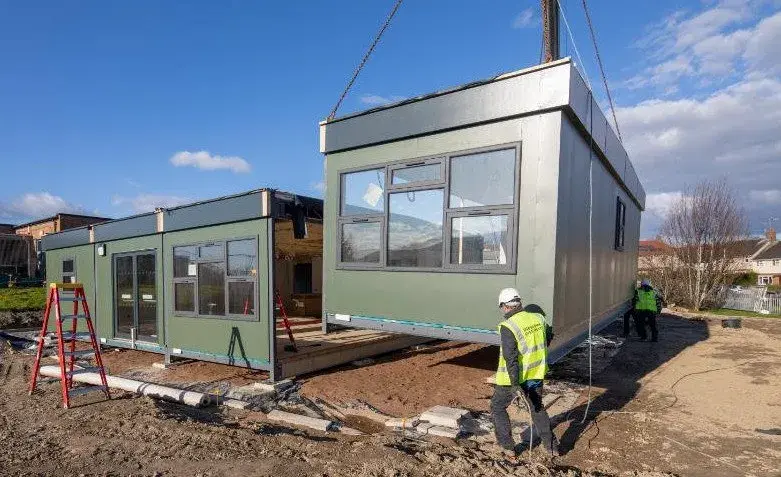
Weather can still influence short on-site phases, such as installation and commissioning, but these stages are typically much shorter and easier to plan around than full on-site construction programmes.
How Off-Site Manufacture Reduces Weather Risk
Off-site manufacture means a large proportion of the building is completed indoors, under controlled temperature and humidity conditions. This removes many of the risks associated with working in unpredictable weather.
Key elements such as insulation, vapour control layers, airtightness detailing, membranes, and internal finishes are installed in factory conditions, where consistency and quality can be closely managed. This helps prevent issues like water ingress, material damage, or delays caused by unsuitable site conditions.
By limiting exposure to weather-sensitive activities on site, modular construction supports more reliable programmes and more consistent build quality.
Factory Conditions And Build Quality
Modular buildings are produced in purpose-built factories using repeatable processes and structured quality checks. Working in controlled environments allows materials and construction techniques to be applied accurately and consistently.
Tasks that can be challenging on exposed sites, such as installing membranes, achieving airtight junctions, or protecting materials during construction, are much easier to manage indoors. The result is a more predictable level of quality, regardless of what the weather is doing outside.
What About Weather During Installation?
Although modular construction significantly reduces weather risk, some on-site activities still need careful planning.
Rain and ground conditions: Heavy rainfall can affect groundwork, access routes, and crane positioning. Temporary ground protection and drainage measures are often used to maintain safe working conditions.
Wind: Modular units are typically lifted into place using cranes, and high winds can affect safe lifting operations. Installations are planned around suitable weather windows, with safety always taking priority.
Cold weather: Ice and snow can increase slip risks and affect access and utilities connections. If conditions are unsafe, work may be paused until it’s safe to continue.
Hot weather: Periods of heat can affect worker welfare and the performance of certain materials, requiring adjusted working practices.
Because these activities are concentrated into a short installation period, the overall impact of weather is much more manageable than on traditional builds.
Meeting Building Regulations In UK Weather Conditions
Modular buildings are designed to meet or exceed UK Building Regulations for weather resistance, thermal performance, and structural stability.
Modules are engineered to withstand wind loads, moisture exposure, and long-term climatic conditions typical of the UK. Detailing around walls, roofs, windows, and junctions is designed to manage rain, wind-driven moisture, and temperature variation over the building’s lifespan.
Compliance is demonstrated through Building Control approval, supported by factory quality checks and on-site inspection during installation.
Programme Certainty And Predictable Delivery
One of the biggest advantages of modular construction is programme certainty. While site preparation takes place, modules can be manufactured in parallel, unaffected by external weather conditions.
The shorter on-site assembly period reduces the risk of prolonged weather-related stoppages, helping projects stay on track even during less predictable seasons. This approach also supports more reliable cost planning, as fewer delays mean fewer knock-on impacts.
For projects with live environments, such as schools, healthcare facilities, or occupied sites, this predictability is a major benefit.
Designing For Long-Term Weather Resilience
Weather performance is not just about construction, it is also about how the building performs over time.
Modular buildings are designed with long-term exposure in mind, considering factors such as site location, orientation, wind exposure, and moisture management. External wall systems, roof constructions, and junction details are designed to cope with the realities of the UK climate.
Because these elements are manufactured and assembled in controlled conditions, accuracy and consistency are easier to achieve. Final testing and inspection help confirm that weather-resistant detailing performs as intended once the building is in use.
When Weather Risk Matters, Planning Early Helps
Weather is one of the few variables in construction that cannot be controlled, but it can be planned for. Experienced modular providers manage weather resilience in practice by considering materials, detailing, logistics, and installation processes from the earliest design stages.
For organisations where programme certainty, quality, and minimal disruption matter, understanding how modular buildings weather performance is designed and delivered over the building’s lifespan can make a real difference.
Get in touch to discuss how offsite construction can help reduce weather-related risk during your build programme.

What is circular economy in modular construction?

Collaborative construction and constructive collaboration: sustainability is key

No Comments Yet
Let us know what you think