

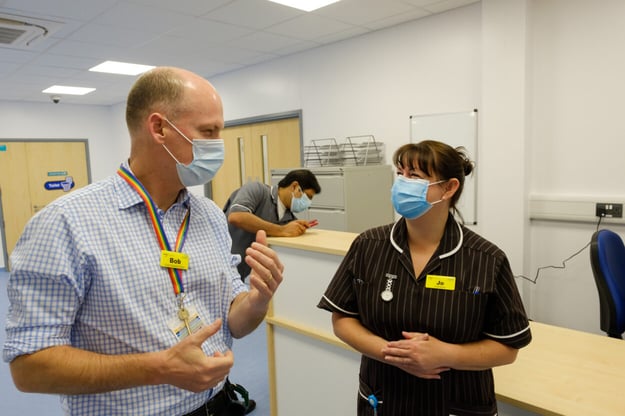
This article explores how modular healthcare buildings can be designed to support patient wellbeing and improve staff working conditions. It highlights the role of layout, natural light, acoustics, air quality and calm, functional environments, while demonstrating how modular construction enables faster delivery of compliant spaces to meet changing demand and support community-based healthcare services.
Designing For Wellbeing: The Impact of Environment On Mental Health
The quality of healthcare environments plays an important role in supporting patient recovery and maintaining staff morale. Modern modular healthcare buildings are designed with layouts that prioritise patient privacy, intuitive wayfinding and ease of access, all of which contribute to reduced anxiety for both patients and staff.
Research and design guidance from UK healthcare estates underscores the importance of building design in supporting patient and staff wellbeing.
NHS design principles highlight that access to natural light, effective ventilation and high-quality indoor environments are key factors in comfort and satisfaction for patients and staff. Ensuring views to outdoor spaces and abundant daylight has also been shown in UK design practice to support calmer, more positive experiences within healthcare settings. Independent research further links natural light to reduced stress, improved mood and faster patient recovery.
Modular Construction Solutions Enabling Calming, Flexible Spaces
Modular healthcare buildings offer exceptional flexibility for healthcare environments, enabling tailored solutions that meet specific clinical and wellbeing needs. Spaces can be configured to support a wide range of functions, from hospital wards, consultation rooms and outpatient clinics to specialist therapy suites, alongside supportive areas such as quiet zones, discharge lounges and patient waiting areas, all designed to enhance comfort, efficiency and the patient experience.
The modular approach also allows for the seamless integration of features such as adaptable lighting, temperature control and noise reduction, helping create environments that support both patient wellbeing and staff productivity.
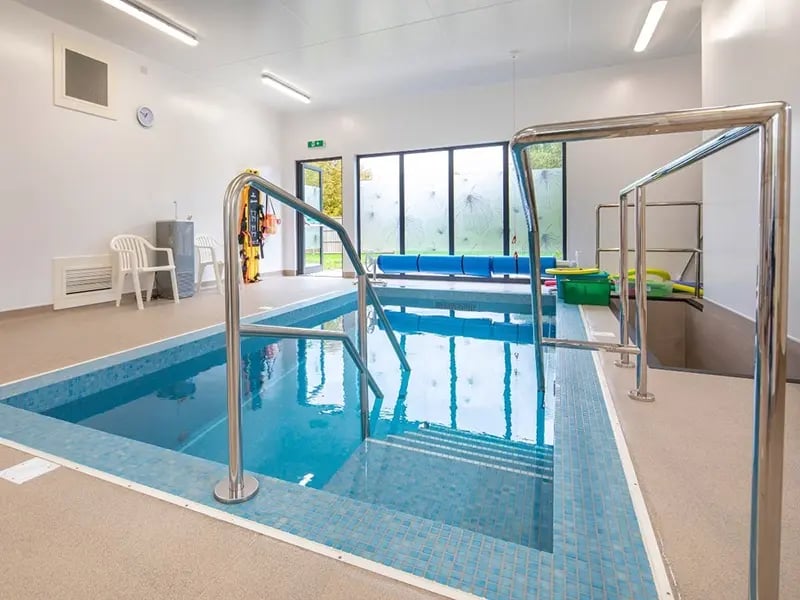
An example of this flexibility in practice is the Dene Barton Community Hospital hydrotherapy pool. Delivered as a bespoke modular specialist therapy suite, the facility was designed to support physiotherapy and rehabilitation services, incorporating a temperature-controlled pool, specialist equipment and accessible changing facilities. The project demonstrates how modular construction can deliver highly specialised healthcare spaces that are both functional and patient focused.
Reducing Disruption: The Role Of Offsite Manufacturing In Patient And Staff Wellbeing
Traditional on-site construction often brings noise, dust, and disruption factors
that can adversely affect vulnerable individuals in healthcare settings.
By manufacturing modules offsite in controlled factory environments, modular construction dramatically minimises these disruptions, maintaining a peaceful atmosphere essential for recovery and professional focus.
Site installation is rapid and predictable, significantly reducing the timeframe during which patients, staff and wider healthcare operations are affected. This approach aligns with infection prevention protocols and ensures continuity of care, supporting a safer and more stable healing environment.
Bespoke Modular Designs For Specialist Mental Health Facilities
Specialist mental health facilities require a carefully considered approach to design, addressing both safety and wellbeing. Modular construction enables the creation of bespoke spaces where anti-ligature fixtures, secure observation panels and calming colour palettes can be incorporated to support patient safety and wellbeing.
Modular solutions should be tailored to meet stringent NHS and CQC requirements, and offer rapid delivery of high-quality, compliant units for acute, forensic and community mental health settings. This agility ensures that healthcare providers can respond to fluctuating demand and specific clinical requirements, enhancing service provision for vulnerable groups.
Sustainability, Safety And Future-Proofing In Healthcare Modular Buildings
Sustainability and safety are integral to the modular healthcare approach.
Energy-efficient building systems, advanced HVAC systems, and the use of low-VOC materials can contribute to healthier indoor air quality and reduce environmental footprint. Modular construction also supports the principles of circular economy, with components designed for disassembly, re-use or adaptation.
Robust quality checks and full compliance with health and safety standards ensure modular buildings are safe, durable and built to last. The flexibility of modular systems allows healthcare providers to expand or adapt facilities quickly as needs change, helping maintain access to high-quality care and supporting better community health outcomes.
Get in touch to find out more about designing modular healthcare buildings that support patients and staff.

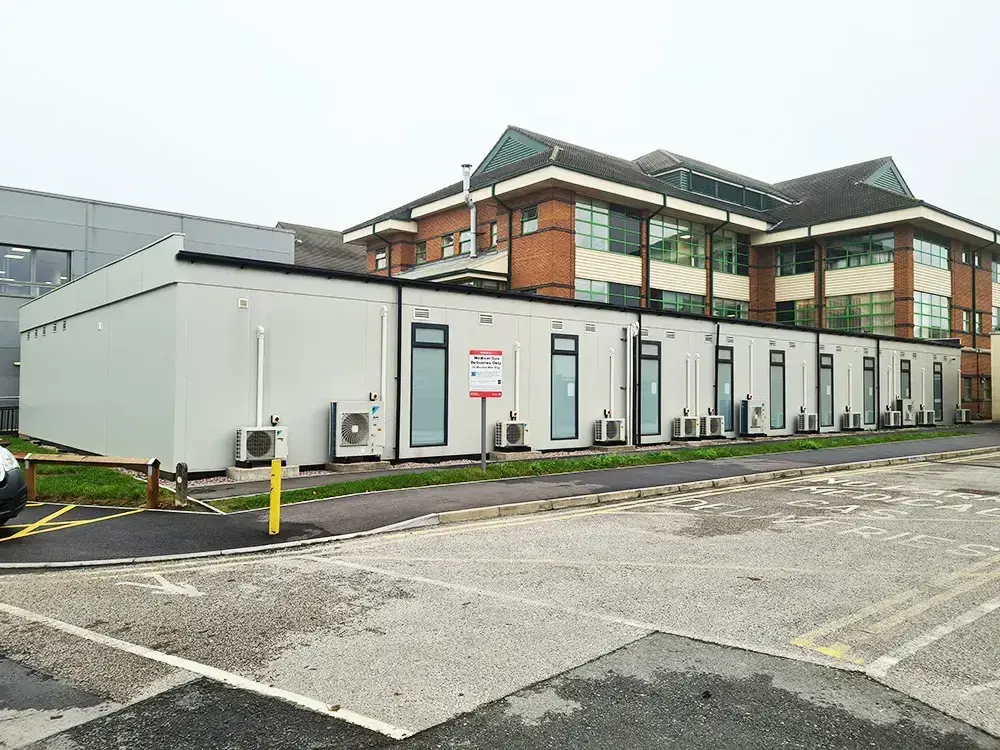
Are Modular Healthcare Buildings the Future of NHS Estates?
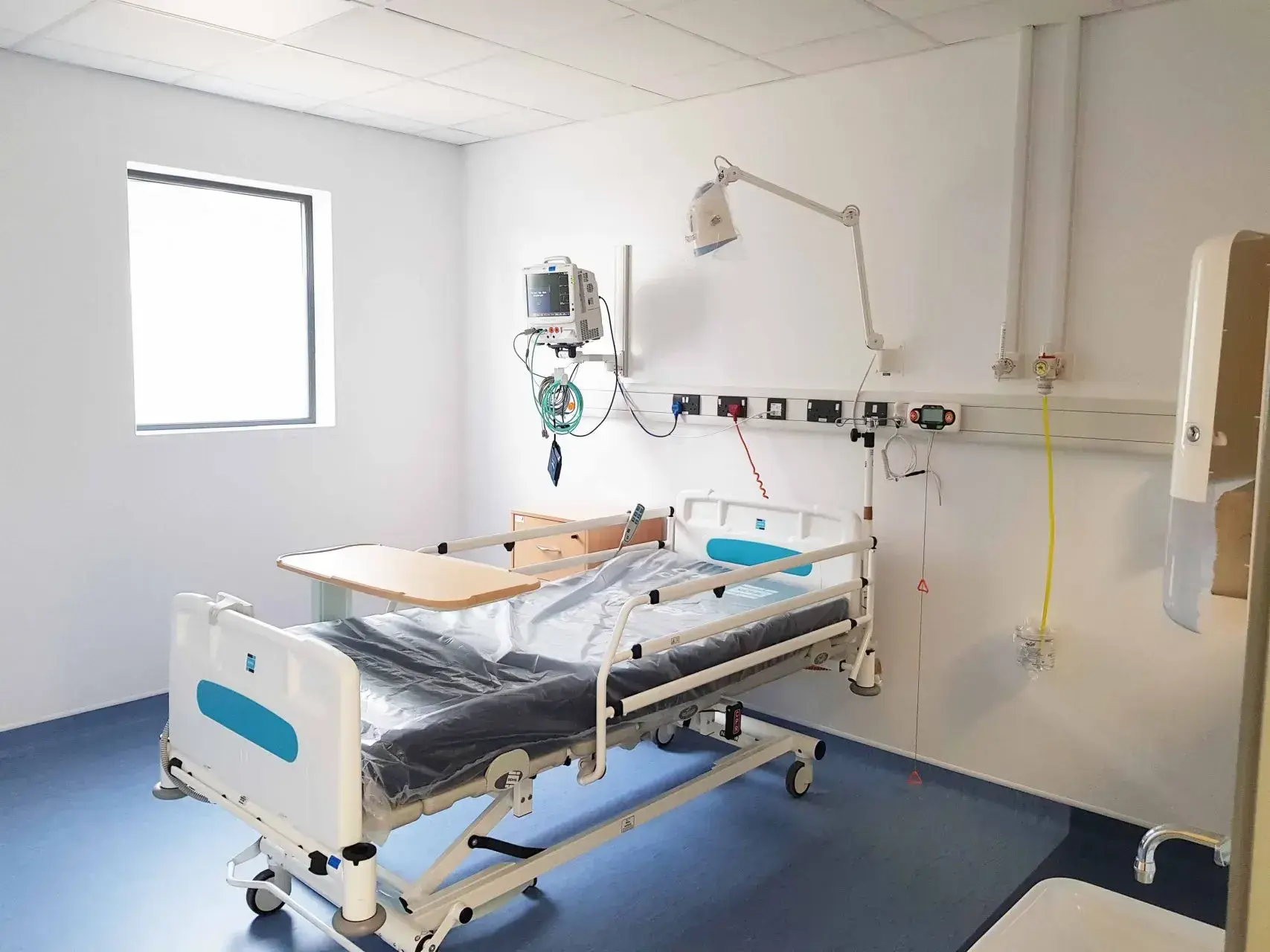
How Modular Healthcare Buildings Help Hospitals Create Dedicated Treatment Spaces
No Comments Yet
Let us know what you think