

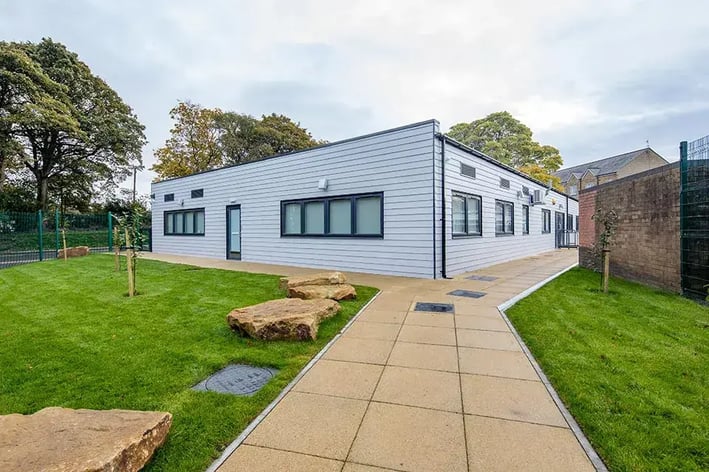
Schools across the UK are facing rising demand for special educational needs and disabilities (SEND) provision. UK Government data shows the number of pupils with Education, Health, and Care Plans (EHCPs) continues to increase, placing growing pressure on school capacity and existing estates.

SEND modular classrooms are purpose-built, offsite-constructed learning spaces designed to support pupils with additional needs, providing a compliant and scalable alternative to adapting existing facilities.
For school leaders, trusts, and local authorities, the challenge is how to expand provision quickly and effectively without disrupting day-to-day operations. Modular buildings provide a practical solution.
This article explains how SEND modular classrooms help schools respond to increasing demand by delivering flexible, purpose-built environments that support inclusive education.
Rising Demand for SEND Provision Is Reshaping School Estates
Demand for SEND places has increased significantly in recent years, placing strain on both mainstream and specialist settings. UK Government statistics show that over 400,000 pupils in England now have an EHCP, with numbers continuing to grow annually.
This growth is not always matched by available space. Many schools are working within estates that were not designed for modern SEND requirements, creating challenges such as:
• Limited access to quiet or sensory spaces
• Inflexible classroom layouts
• Pressure on shared facilities
In addition, local authorities are facing increasing pressure to secure appropriate placements, meaning more schools are being asked to expand their SEND provision.
As a result, schools must find ways to respond quickly while maintaining safe, effective learning environments for all pupils.
Creating Purpose-Built Spaces for Inclusive Education
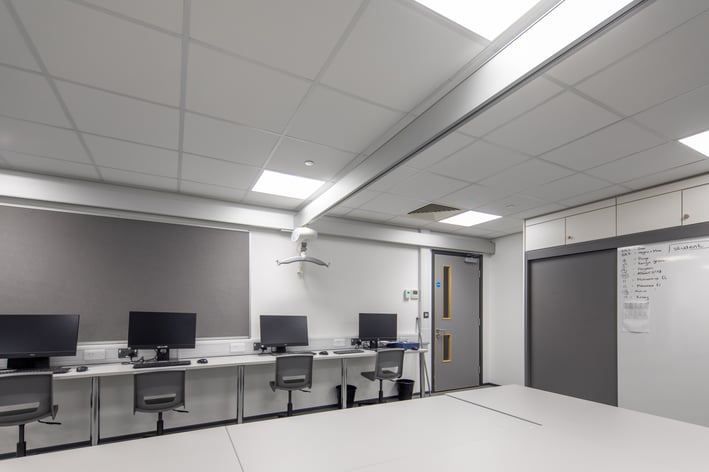
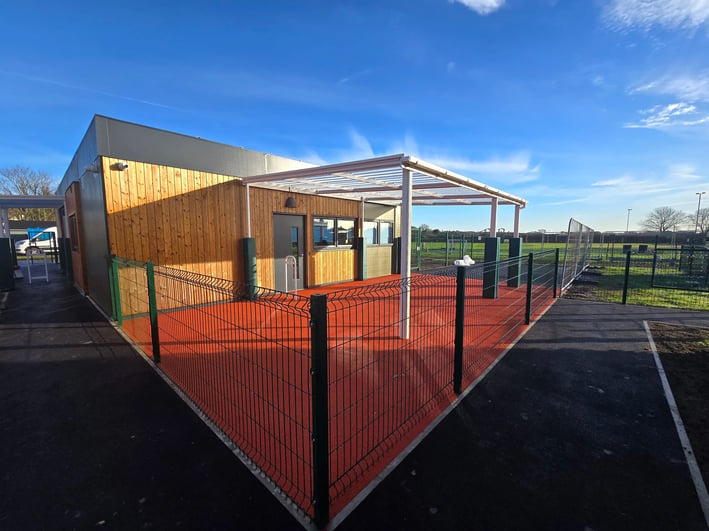
Additional space is essential for delivering effective SEND provision. SEND modular classrooms allow your school to introduce purpose-built environments aligned with both educational needs and regulatory requirements, without relying on adapted spaces within your existing estate.
These environments can be configured to support a range of teaching and support approaches, including:
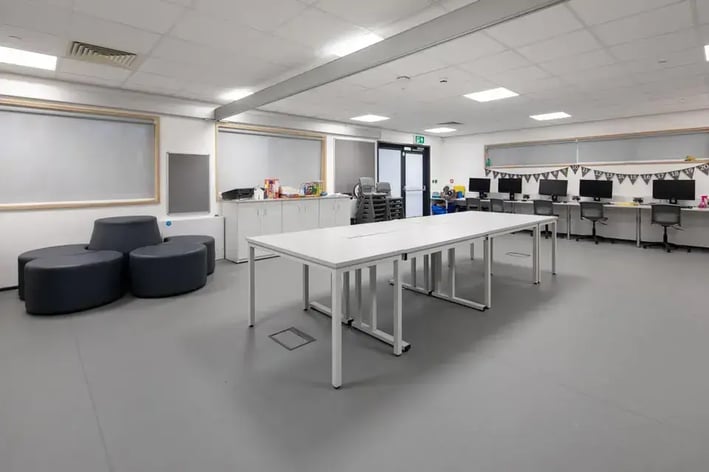
• Flexible learning areas for both group and individual teaching
• Dedicated zones for targeted interventions and specialist support
• Adaptable sensory environments with controlled lighting and acoustics
• Spaces for therapy, wellbeing, and external support services
Each space can be designed around pupil needs, including accessibility, acoustics, and supervision. For more detail, read how modular SEND classrooms are designed differently.
Rather than adapting unsuitable areas, your school can introduce dedicated environments that support better learning outcomes and more effective staff delivery. Research shows that well-designed learning environments can have a measurable impact on pupil engagement and outcomes, particularly for those with additional needs.
Fast, Controlled Delivery Minimises Disruption
One of the key advantages of modular buildings for SEND schools is speed of delivery. Traditional construction can take months or years, often causing disruption to teaching and daily operations.
Modular construction takes a different approach:
• Up to 70% of the building is completed offsite in a controlled factory environment
• Onsite installation is significantly shorter, reducing disruption
• Programmes are more predictable, with fewer weather-related delays
This approach allows your school to respond quickly to increasing demand without compromising the learning environment during construction.
In practice, modular classrooms have been delivered within live school environments to provide additional SEND space quickly and with minimal disruption. For example, projects such as Chellow Heights Special School demonstrate how modular buildings can support expanding provision in real-world settings.
For schools managing urgent SEND requirements or responding to local authority placements, this speed is a critical factor. In many cases, modular classrooms can be delivered in a matter of weeks, helping schools meet immediate capacity needs. 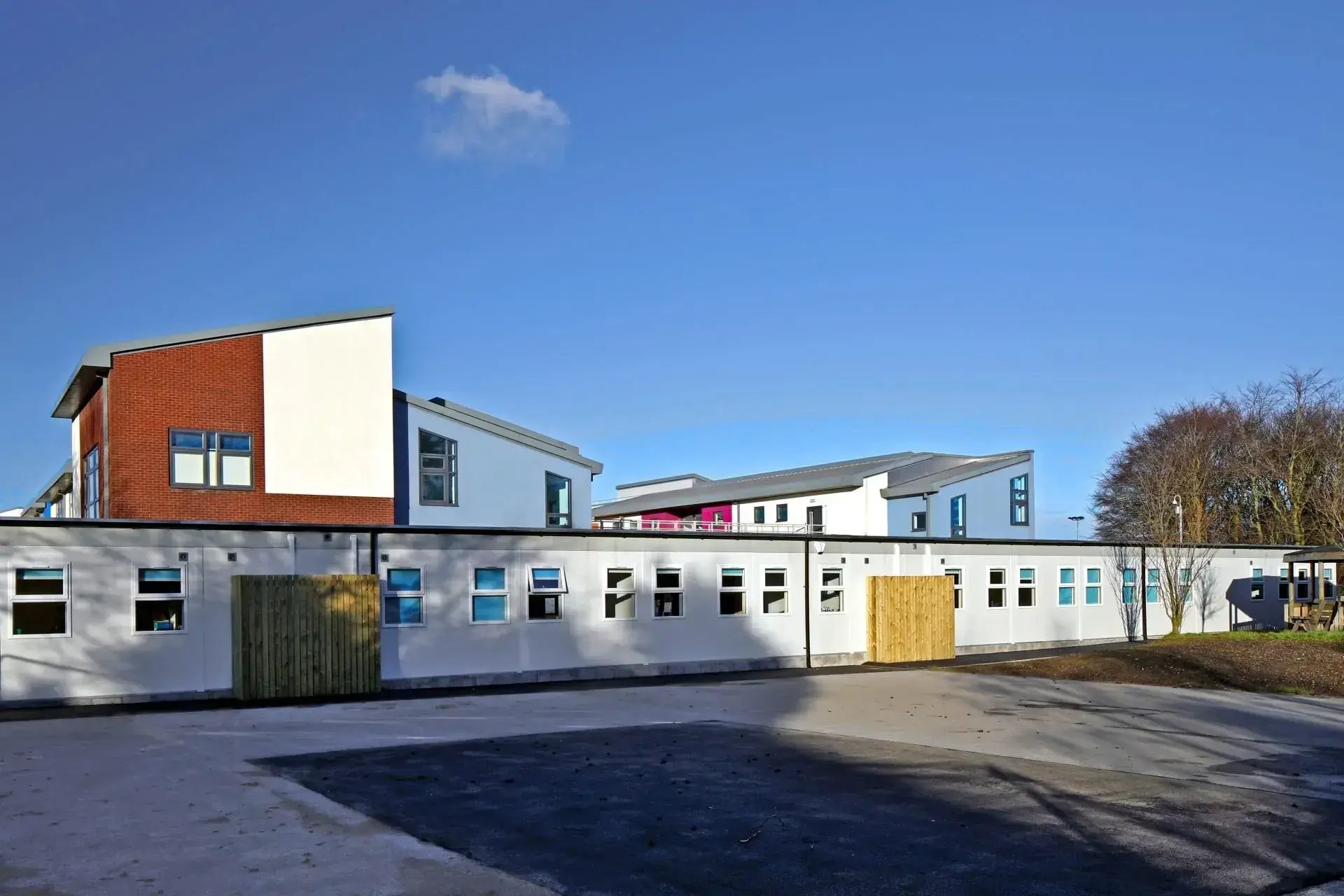
Flexible Design Supports Evolving Needs
SEND provision is not static. Pupil needs change, cohorts evolve, and funding priorities shift. Modular buildings for SEND schools provide the flexibility to adapt alongside these changes.
Key design benefits include:
• Configurable layouts to support different teaching models
• Scalable solutions that can be expanded over time
• Relocatable structures if estate requirements change
This flexibility is increasingly important as schools respond to changing pupil profiles and local authority requirements.
Instead of committing to fixed infrastructure, modular buildings allow you to plan for both current and future demand.
Enabling Inclusive Education Without Compromising Mainstream Provision
Expanding SEND provision should not come at the expense of the wider school environment. Modular buildings allow schools to increase capacity while maintaining balance across the estate.
By introducing dedicated SEND modular classrooms, schools can:
• Reduce pressure on mainstream classrooms
• Improve staff-to-pupil ratios in specialist settings
• Enhance overall site organisation and flow
This approach supports a more inclusive model of education, where all pupils have access to appropriate environments without compromise. Government policy continues to emphasise inclusive education, with more pupils being supported within mainstream settings where appropriate.
For multi-academy trusts and local authorities, this also provides a consistent, scalable solution across multiple sites.
Meeting Demand with Confidence
Rising demand for SEND provision is a long-term challenge that requires practical, scalable solutions. Expanding your estate with well-designed, compliant spaces is essential to delivering inclusive education and maintaining high standards across your school.
SEND modular classrooms provide a clear path forward. They offer speed, flexibility, and certainty, allowing you to respond to demand without compromising quality or disrupting your existing environment.
Get in touch and discover how modular classrooms can help your school expand and respond to growing SEND demand.

Why Modular Buildings Are Ideal For Multi-Use School Facilities
How Modular Buildings Help Schools Future-Proof Their Estates
No Comments Yet
Let us know what you think