

If you're considering hiring a modular building, one of the first questions you're likely to ask is how much it will cost.
Modular building hire costs in the UK start from £275 per week with Elite Systems*, based on a single-storey, 64m² open-plan building hired over four years. Delivery, service connections, and external works are additional costs.
Whether you need temporary classrooms, additional office space, or healthcare accommodation, understanding the costs involved is an important part of planning your project.
While modular building hire can provide a flexible alternative to purchasing a building outright, the overall cost depends on several factors, including building size, specification, hire duration, and site requirements.
In this article, we explain what influences portable building hire costs in the UK, what additional expenses to consider, and how to obtain an accurate quotation.
*Based on a single-storey, 64m² open-plan building on a four-year hire period. Delivery, service connections, and external works, including foundations and access, are excluded.
What Factors Affect Temporary Building Hire Costs?
The total cost of hiring a modular building depends on several factors, including:
- Building size and layout – Larger buildings and more complex layouts can increase hire costs.
- Building specification – Specialist facilities, internal finishes, and additional features can influence pricing.
- Hire duration – The length of the hire agreement can affect the weekly rental rate.
- Site requirements – Delivery, foundations, site preparation, access arrangements, and utility connections can add to the overall project cost.
As modular building hire requirements vary between projects, obtaining a project-specific quotation is the most reliable way to understand the full cost.
|
Cost Factor |
|
How It Affects the Cost |
|
Building size and layout |
|
Larger buildings and more complex layouts increase rental costs. |
|
Building specification |
|
Additional facilities, finishes, and specialist requirements affect pricing. |
|
Hire duration |
|
The length of the agreement influences rental rates and the total hire cost. |
|
Delivery and installation |
|
Transport distance, site access, and lifting requirements can affect installation costs. |
|
Site preparation |
|
Foundations, groundworks, and utility connections add to the overall budget. |
|
End-of-hire removal |
|
Dismantling, disconnection, and transportation may involve additional charges. |
Understanding these factors early can help organisations establish a realistic budget and avoid unexpected costs.
How Does Building Size And Layout Affect Hire Costs?
Building size is one of the main factors influencing portable building hire costs.
A single modular unit providing additional office space will generally cost less than a larger building made up of multiple units. However, the internal layout and intended use can also affect pricing.
For example, an open-plan office may require fewer internal partitions and facilities than a building containing several teaching rooms, toilets, and storage areas.
The number of people using the building and the activities taking place inside it will help determine the space required.
Establishing these requirements early helps ensure the building provides suitable accommodation without paying for unnecessary additional space.
Does The Building Specification Influence The Hire Price?
Not all modular hire buildings are designed or equipped in the same way.
A temporary classroom may require heating, lighting, storage, and accessible toilet facilities, while a healthcare building could need specialist finishes, individual consulting rooms, and additional mechanical and electrical services.
Other specifications that can influence hire costs include:
- Heating, ventilation, and air conditioning
- Internal partitions, doors, and flooring
- Toilets, kitchens, and welfare facilities
- Electrical and data installations
- Fire safety and security systems
- Specialist equipment and room requirements
Some buildings may already include many of these features, while others may need adapting to suit the project.
Modular hire buildings can be configured for different operational requirements, from straightforward open-plan accommodation to specialist facilities.
How Does The Length Of Hire Affect The Cost?
The length of the hire agreement is another important consideration.
Some organisations only require additional accommodation for several months, while others may need a building for several years.
A school might hire temporary classrooms during refurbishment, while a healthcare provider could require additional consulting rooms over a longer period to accommodate increasing patient demand.
Longer-term agreements may offer a different rental cost structure from shorter arrangements. However, it's important to consider the overall cost across the full hire period rather than focusing solely on the weekly or monthly rental charge.
Hire terms vary between suppliers. At Elite Systems, the minimum hire period is six months.
For organisations with changing requirements, hiring can provide flexibility without the initial capital investment associated with purchasing a building.
What Delivery And Installation Costs Should You Consider?
Delivery and installation costs depend on the building's size, location, and site accessibility.
Modular buildings are manufactured and prepared offsite before being transported to their final location, where they are positioned and installed.
Sites with restricted access or limited space for delivery vehicles may require additional planning or specialist lifting equipment.
For example, installing a building within an operational school or hospital may involve coordinating deliveries and installation activities to minimise disruption.
Transport distance, the number of modular units, access restrictions, and crane requirements can all influence costs.
Assessing these factors early helps ensure delivery and installation requirements are included in the project quotation.
How Do Site Preparation And Foundations Affect Hire Costs?
Before a modular building can be installed, the site must be suitable to support it safely.
Depending on ground conditions and building requirements, preparation works may include ground investigations, levelling, foundations, and other enabling works.
The appropriate foundation solution will depend on the building's size, weight, intended use, and ground conditions.
Utility connections must also be considered. Electricity, water, drainage, and data services may need connecting to existing infrastructure, with additional work required where suitable connections aren't already available.
These costs can vary considerably between projects, even where the buildings themselves are similar.
An early site assessment can identify potential requirements and help establish a more accurate budget.
Understanding the planning requirements for modular buildings on existing sites can also help identify potential site constraints and considerations before installation.
Are There Additional Costs When Hiring A Modular Building?
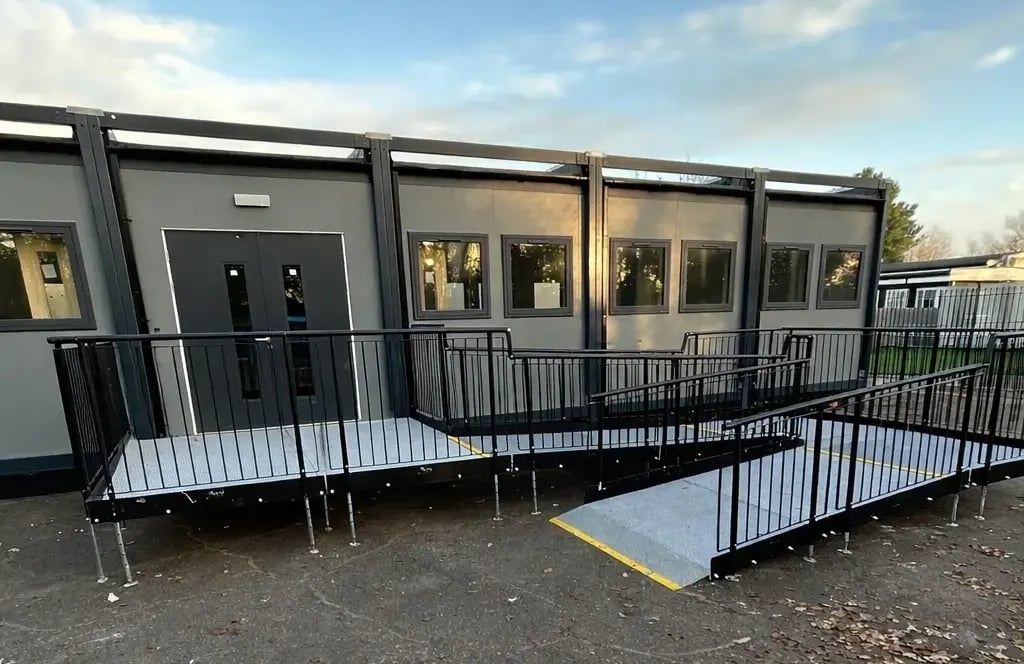
Alongside rental, delivery, and installation, additional costs may include access ramps, external pathways, drainage works, lighting, and security provisions.
Organisations should also establish what is included in their hire agreement, particularly regarding maintenance, insurance, and any alterations required during the hire period.
At the end of the agreement, the building may need to be disconnected, dismantled, and transported away, which can involve additional charges.
Understanding these responsibilities and costs from the outset helps avoid unexpected expenditure.
Examples Of Modular Building Hire Projects
Modular building hire can support different accommodation requirements, from temporary teaching facilities to specialist healthcare buildings.
The following projects demonstrate how hire arrangements can provide flexibility for organisations with different operational needs.
University Of West London – Temporary Lecture Theatre
The University of West London required additional teaching accommodation for a defined period.
A modular lecture theatre was provided on a 39-week hire agreement, installed within an existing university car park using temporary foundations.
The building incorporated acoustic treatments, heating, lighting, and data connections, providing functional teaching accommodation without requiring a permanent building purchase.
Read the University of West London Case Study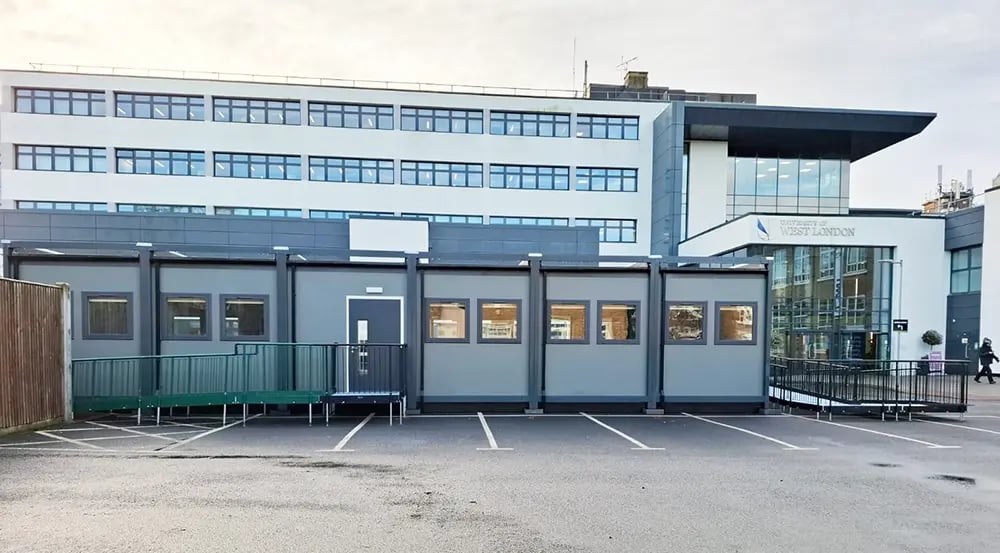
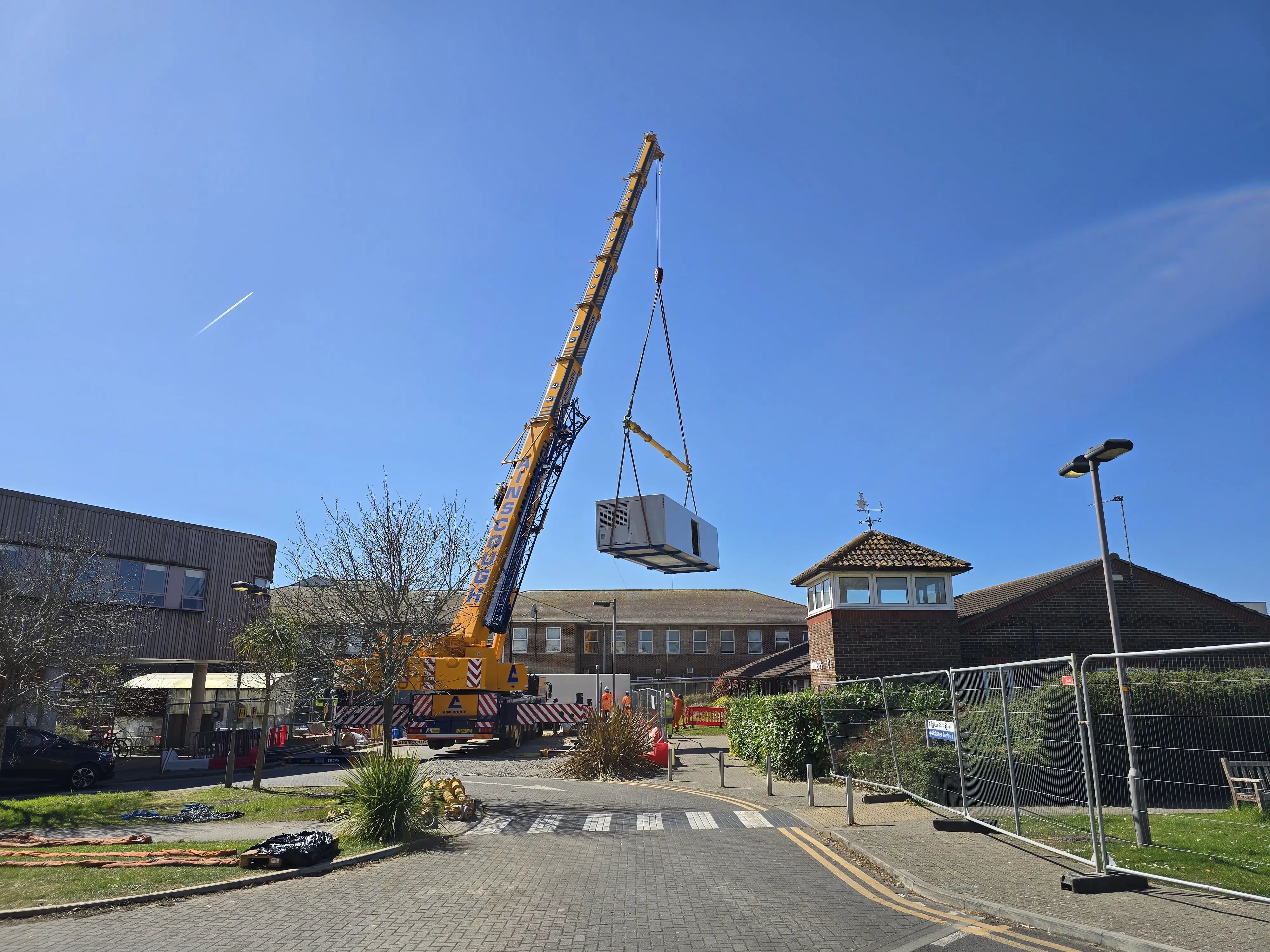
St Richard's Hospital – Modular Mortuary Facility
St Richard's Hospital in Chichester required temporary mortuary accommodation during a wider hospital redevelopment programme.
A purpose-built modular facility was initially provided on a hire arrangement, incorporating specialist mortuary accommodation, refrigerated storage, and supporting staff facilities.
The Trust subsequently purchased the building, demonstrating how modular hire can accommodate changing long-term requirements.
Read the St Richard's Hospital Case Study
Is Hiring A Modular Building More Cost-Effective Than Buying?
Hiring can be particularly suitable where additional accommodation is required for a defined period, such as during refurbishment, temporary capacity increases, or while longer-term estate plans are being developed.
Rather than committing to the full purchase cost, organisations can spread accommodation costs across an agreed rental period.
However, hiring isn't necessarily the most cost-effective option in every situation.
Where a building is required permanently, purchasing may offer better long-term value. The most appropriate approach depends on the expected duration of use, available budget, and operational requirements.
Some hire agreements do offer the option to purchase the building later, providing flexibility if a temporary requirement becomes permanent.
For more information, explore the Modular Building Hire and Purchase options.
What Information Do You Need To Get A Modular Building Hire Quote?
Providing some basic project information can help your supplier prepare a more accurate quotation.
Before making an enquiry, consider:
- Intended use:
What will the building be used for? - Building size:
How much space is needed and how many people will use it? - Hire duration:
How long will the accommodation be required? - Site location:
Where will the building be installed, and are there access restrictions? - Specification:
Are specialist facilities or particular layouts required? - Timescale:
When does the building need to be ready?
You don't need every detail finalised before making an enquiry. An experienced supplier can help assess your requirements and identify site-related considerations that may influence costs.
Planning Your Modular Building Hire Project
Understanding the factors influencing temporary building hire costs can help organisations make informed decisions about their accommodation requirements and budgets.
Building size, specification, hire duration, and site conditions all contribute to the overall cost, making early planning important.
A project-specific quotation will provide a clearer understanding of the investment required and the most appropriate solution.
Elite Systems provides turnkey modular building hire solutions across the UK, supporting projects from initial site assessments through to installation and handover.
Request a Modular Building Hire Quote

No Comments Yet
Let us know what you think