


When researching modular buildings, one of the first questions buyers ask is
'Will a modular building pass building regulations?. The short answer is yes. Modular buildings in the UK must meet the same Building Regulations as traditional construction, with no reduced standards or exemptions.
This article explains how modular building regulations in the UK apply in practice, outlining how modular buildings are designed, manufactured, and installed to achieve full regulatory compliance. It provides clear, reassurance on safety, performance, and long-term suitability, helping buyers understand what to expect when considering modular construction across education, healthcare, commercial, and public-sector projects.
Do Modular Buildings Have to Meet UK Building Regulations?
Yes. Modular buildings are subject to the Building Regulations 2010 in exactly the same way as traditionally constructed buildings. This includes requirements covering structural safety, fire protection, energy efficiency, accessibility, ventilation, drainage, and overall occupant safety.
For a detailed breakdown of how modular building regulations apply in practice, including Building Control approval and real-world examples explore our compliance guide.
Building Regulations apply to most permanent and semi-permanent modular buildings, including schools, healthcare facilities, offices, and specialist public-sector buildings. Compliance is assessed through the Building Control process, and a modular building cannot be legally occupied until a Completion Certificate has been issued.
In short, modular construction does not bypass regulation. If a building is intended for regular use, it must comply.
Modular Construction and Regulatory Compliance
The difference between modular and traditional construction is not the rules themselves, but when and where those rules are met.
With modular construction, much of the work required to meet UK Building Regulations happens earlier in the process. Structural systems, insulation, fire protection measures and building services are planned and coordinated in detail before manufacturing begins. This means compliance is built in from the start, rather than checked or corrected later on site.
Because modules are manufactured in controlled factory environments, quality checks can be carried out consistently against regulatory requirements. This reduces on-site variability and helps ensure performance standards are met before the building arrives for installation.
Key Areas Covered by Modular Building Regulations in the UK
UK Building Regulations focus on ensuring buildings are safe, accessible, energy efficient, and suitable for long-term use. For modular buildings, this includes:
- Structural performance, ensuring the building can safely support loads and withstand environmental forces
- Fire safety, including compartmentation, escape routes, and protection of occupants and neighbouring buildings
- Energy efficiency, covering insulation, airtightness, and efficient building services
- Accessibility, ensuring inclusive access and use for all occupants
- Ventilation, drainage, and sanitation, protecting health and wellbeing
These requirements apply regardless of whether a building is constructed entirely on site or assembled from factory-built modules.
Building Control Approval for Modular Buildings
Most modular buildings require Building Control approval. This process confirms that the building meets the relevant Building Regulations through a combination of design review, inspection, and final sign-off.
For modular projects, Building Control typically reviews design information before manufacture, inspects key stages during installation, and carries out final checks once the building is complete. Following successful inspection, a Completion Certificate is issued, confirming that the building complies with UK Building Regulations and can be legally occupied.

A Practical Example of Compliant Modular Delivery
In practice, compliance with modular building regulations in the UK is demonstrated across a wide range of real-world projects, including complex public-sector facilities.
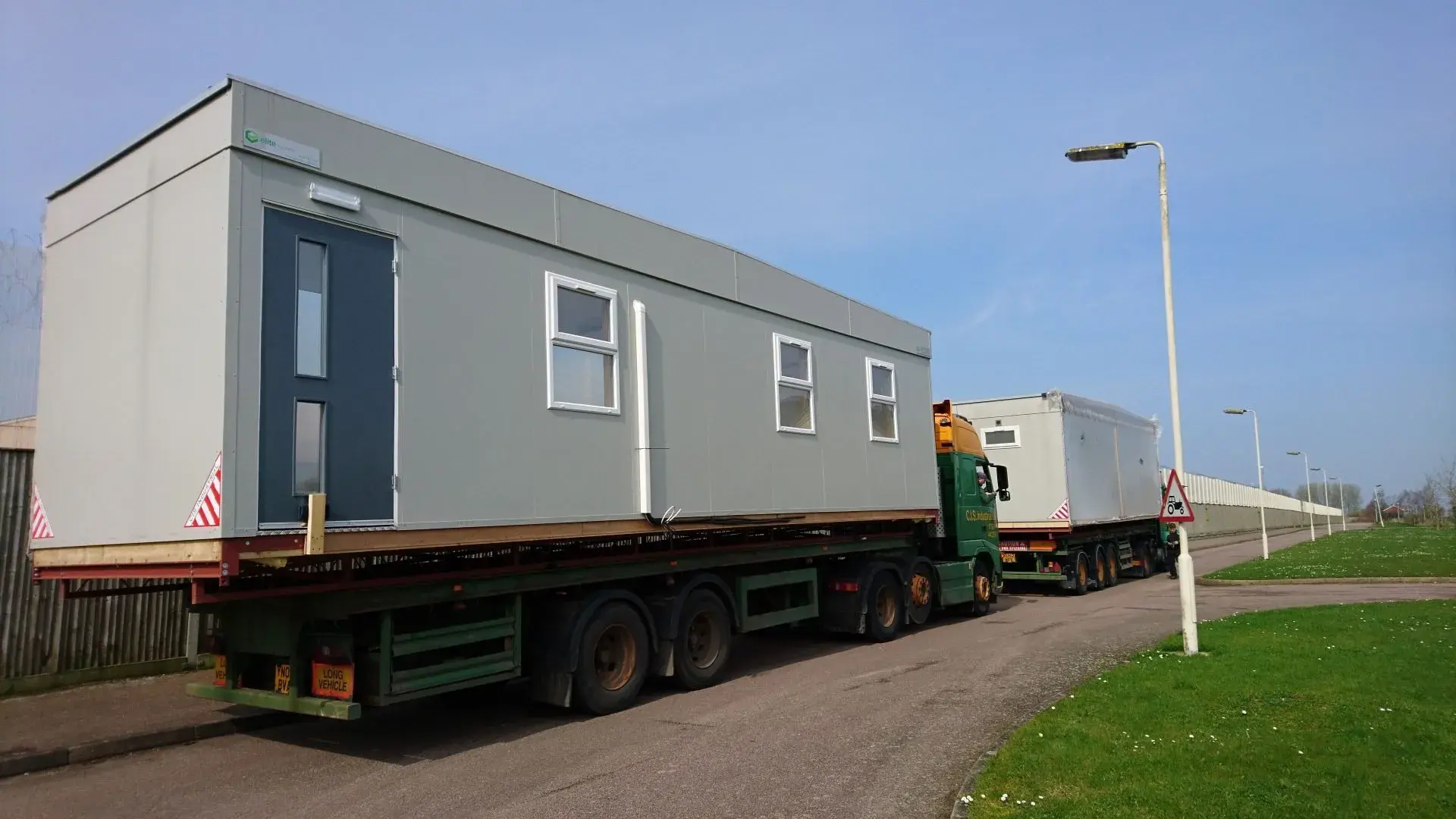
This modular forensic centre delivered at Waltham Forest Council provides a clear example. Specialist forensic buildings place high demands on regulatory compliance, particularly around fire safety, security, durability, and controlled internal environments. Despite this complexity, the building was delivered as a permanent facility and achieved full Building Control approval.
The modular approach allowed much of the regulatory compliance to be addressed during design and factory manufacture, with Building Control inspections focusing on site-specific elements such as foundations, drainage connections, accessibility provisions, and fire escape routes during installation. The completed building received formal sign-off confirming compliance with UK Building Regulations.
Modular Does Not Mean Temporary or Non-Compliant
A common misconception is that modular buildings are temporary structures with reduced regulatory oversight. In reality, most modular buildings are designed for long-term use and are subject to the same regulatory scrutiny as traditional buildings.
If a building exceeds basic size thresholds and is intended for regular occupation, Building Regulations apply regardless of how it is constructed. Modular construction does not remove these obligations and does not reduce standards.
Summary
Modular buildings in the UK must fully comply with Building Regulations, just like traditionally constructed buildings. When properly designed, manufactured, and installed, modular buildings achieve the same levels of safety, performance, and durability.
As demand continues to grow for faster and more efficient construction across education, healthcare, and public-sector projects, modular construction is increasingly demonstrating that regulatory compliance and modern methods of construction go hand in hand.
Get in touch to discuss modular building solutions designed to meet UK Building Regulations.

Modular Building Regulations in the UK: Will a Modular Building Comply?
How Modular Building Companies Deliver Bespoke Solutions

No Comments Yet
Let us know what you think