
Modular Building Regulations in the UK: A Guide to Compliance

Request A Quote Download Brochure

Modular Building Regulations in the UK

Modular buildings in the UK are required to comply with the same Building Regulations as traditionally constructed buildings. This guide provides a clear overview of how modular building regulations in the UK apply, what areas they cover, and how compliance is demonstrated in practice. It is intended as a reference for organisations researching modular construction across education, healthcare, commercial and public-sector projects.


Do Modular Buildings Have to Meet UK Building Regulations?

Yes. Modular buildings are subject to the Building Regulations 2010 in exactly the same way as traditionally constructed buildings. This includes requirements covering structural safety, fire protection, energy efficiency, accessibility, ventilation, drainage, and overall occupant safety.

Building Regulations apply to most permanent and semi-permanent modular buildings, including schools, healthcare facilities, offices, and specialist public-sector buildings. Compliance is assessed through the Building Control process, and a modular building cannot be legally occupied until a Completion Certificate has been issued.

In short, modular construction does not bypass regulation.
If a building is intended for regular use, it must comply.

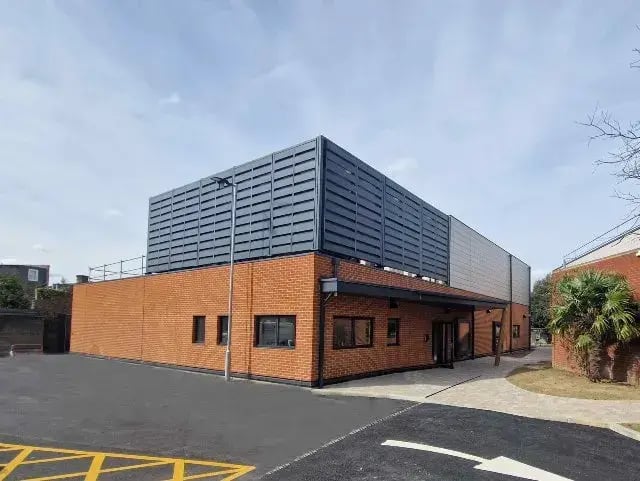
East London Forensic Centre modular mortuary

What Areas Do the Regulations Cover?

UK Building Regulations are supported by Approved Documents, which explain how legal requirements can be met. For modular buildings, the most relevant areas include:

  • Structure (Part A): Making sure the building is strong and stable, and can safely cope with weight, wind and ground conditions.
  • Fire Safety (Part B): Reducing fire risk, providing safe escape routes and ensuring people can evacuate safely.
  • Site Preparation and Moisture Resistance (Part C): Protecting the building from damp, contamination and condensation.
  • Sound Resistance (Part E): Reducing noise between rooms to maintain privacy and comfort, especially in hospitals, schools and SEND buildings, where quiet spaces are important.
  • Ventilation (Part F): Supplying fresh air to maintain good indoor air quality.
    Sanitation and Water Safety (Part G): Providing safe hot water and managing water use effectively.
  • Drainage and Waste (Part H): Safely removing waste water and rainwater from the building.
  • Protection from Impact (Part K): Preventing injuries through safe stairs, ramps, barriers and glazing.
  • Energy Efficiency (Part L): Reducing energy use through insulation, good construction and efficient building systems.
  • Accessibility (Part M): Making sure buildings can be safely and comfortably used by everyone.
  • Toilet Accommodation (Part T): Providing suitable toilet facilities, including accessible toilets, based on how the building is used and how many people use it.

How Modular Buildings Demonstrate Compliance

The difference between modular and traditional construction is not the rules themselves, but when and where those rules are met.

With modular construction, much of the work required to meet UK Building Regulations happens earlier in the process. Structural systems, insulation, fire protection measures and building services are planned and coordinated in detail before manufacturing begins. This means compliance is built in from the start, rather than checked or corrected later on site.

Because modules are manufactured in controlled factory environments, quality checks can be carried out consistently against regulatory requirements. This reduces on-site variability and helps ensure performance standards are met before the building arrives for installation.

If alternative materials or construction methods are proposed, additional evidence may be required to demonstrate that regulatory performance standards are met or exceeded.

The Role of Building Control

Building Control bodies assess modular buildings in the same way as traditionally constructed projects. This typically includes:

    • Reviewing design drawings and technical specifications
    • Assessing structural and fire strategies
    • Inspecting foundations, drainage and installation on site
    • Issuing a Completion Certificate once all requirements are satisfied

This process confirms that the completed building is safe, compliant and suitable for use.

Modular-vs-traditional
 

Short-Term and Hire Modular Buildings

Short-term or hire modular buildings are not automatically exempt from Building Regulations. In most cases, the need for compliance is determined by the building’s size, use and risk profile rather than how long it is on site.

Building Control approval is usually required where a modular building is over 30 square metres, used by staff, pupils, patients or the public, or connected to mains services. This applies even if the building is intended to be used for months rather than years.

GE4C4370-1

When a Modular Building May Be Exempt

A modular building may be exempt from Building Regulations only where all of the following conditions are met. The exemption typically applies where the building is:

• Single storey
• No larger than 30 square metres
• Not used for sleeping
• Not used as a workplace, classroom or healthcare space
• Located at least one metre from a boundary, or constructed mainly from non-combustible materials

Where any one of these conditions is not met, the building will normally be subject to Building Regulations. Even where an exemption applies, other requirements such as planning permission or fire safety legislation may still need to be considered.


Modular Compliance in Public-Sector Projects

Public-sector modular buildings often operate under additional scrutiny beyond Building Regulations alone. Schools, healthcare facilities and local authority buildings may also need to align with sector-specific guidance and operational standards.

Projects such as forensic centres, primary schools and further education facilities demonstrate how modular construction can meet both regulatory and functional requirements in complex, highly regulated environments.

Elite-consultation

A Regulated and Proven Approach

Modular construction is a mature and regulated method of building delivery in the UK. When properly designed, manufactured and installed, modular buildings are fully capable of meeting UK Building Regulations across education, healthcare, commercial and public-sector applications.

Understanding how modular building regulations in the UK apply helps organisations make informed decisions with confidence and clarity.

Get in touch to discuss compliant modular building solutions tailored to your project requirements.

Book a Meeting
Accreditations

Trusted & Accredited

We take pride in meeting the highest standards across every aspect of our business. Our accreditations demonstrate our commitment to quality, safety, and people:

We hold a wide range of additional accreditations. Explore the full list to see how we uphold the highest standards across every aspect of our business.

Request A Consultation

Want To Discuss Your Project?

Get expert guidance and a clear plan for your modular build. Fill out the form below to request a consultation with one of our experts, and we’ll be in touch to arrange a convenient time to talk.

70
%
faster build times vs traditional
80
%
less construction waste compared to traditional methods
1000
+
successful installations nationwide

Did You Know We Offer Site Visits?

Take the first step and see your modular project come to life. Fill out the contact form below to book your site visit.