

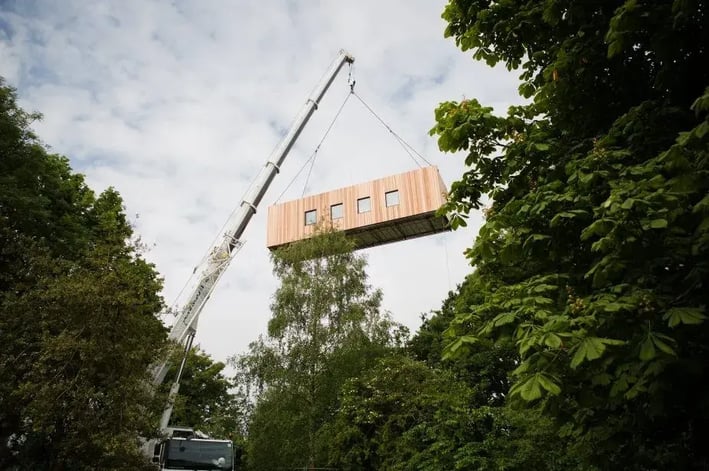
The UK has set itself ambitious targets for what the government has termed the ‘green industrial revolution’, and at Elite we welcome the recognition of the role that construction has to play in this exciting transition.
The ‘green industrial revolution’ – also known more widely as the transition to a green economy – is expected to put the UK at the forefront of the carbon reduction drive, and will include initiatives such as encouraging the switch to electric vehicles as well as investing in renewable energy provisions.
But most welcome of all is the impact that the initiative will have for the construction sector, where it is possible that the green economy could create 1.2 million manufacturing and construction jobs.
Green is the new black
Contrary to its historic reputation as something of an old-fashioned industry, modern construction is a cradle of innovation – and modular and offsite construction are leading the way.
With the government prioritising green innovations in construction such as energy-efficient heating systems, more effective insulation, and other eco-friendly interventions, it’s fair to say that the offsite sector has a huge part to play.
The government’s own paper on the ‘green industrial revolution’ highlights the need for the public sector to prioritise carbon reduction in the next decade – and with their lower carbon footprint and guaranteed build standards, it certainly looks like this will include a shift to high quality modular buildings in the future.
We have been long-term advocates of modular construction as an agent of change: our bespoke buildings can include everything from solar panels to electric bike charging points, as well as triple glazed windows, solar shading to keep buildings cool in summer, triple-insulation to retain heat in winter, and rainwater harvesting systems. These measures can mean that purpose built modular eco classrooms, offices, or healthcare buildings can achieve a BREEAM rating of ‘outstanding’.
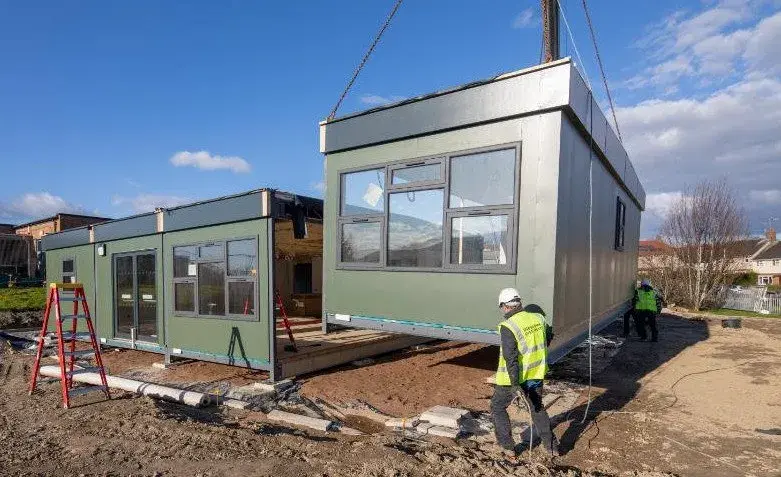
What’s more, modular construction reduces the need for vehicles to be travelling to and from a construction site – with just a handful of site deliveries required – emissions are cut during the build process too. What’s more, it’s possible to specify the use of renewable or low-carbon-impact materials throughout the building, further improving a building’s green credentials.
New growth
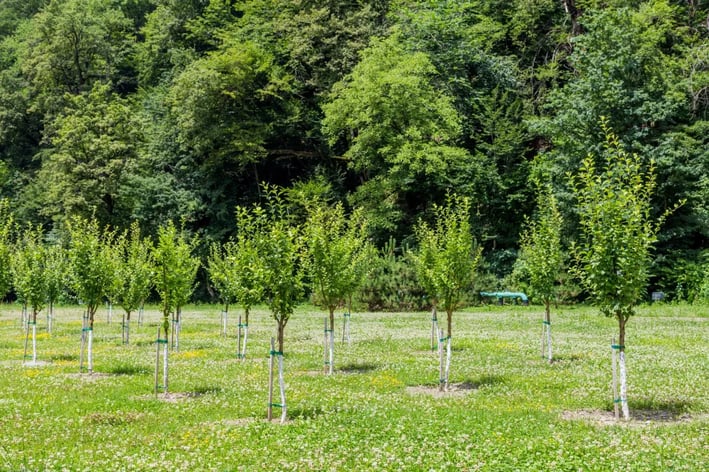
While our modular construction methods are already kinder to the environment than traditional building, we believe there’s more to be done. We’re aiming for zero carbon construction – and to set us on the right path, we’ve partnered with leading environmental charity Trees for Life.
Our Trees for Life corporate grove in Scotland’s ancient Caledonian forest is growing every year, thanks to our commitment to plant one tree for every single person we accommodate in our modular buildings. So if we manufacture and fit a double classroom, for example, that’s 60 trees that are planted as part of the charity’s rewilding programme. With estimates stating that rewilding six million hectares could sequester up to 47 million tonnes of CO2 per year, this helps put us on the path toward fully offsetting our environmental impact – and we’re aiming toward net zero carbon for our buildings.
It’s an ambitious target, but we’re encouraged by the fact that the UK government is prioritising kickstarting the green economy, and putting construction at the very heart of this process. Like many modular construction specialists, we’re proud to say that we’re already playing our part.

5 common modular building mistakes you can avoid by working with us
What is circular economy in modular construction?
No Comments Yet
Let us know what you think